
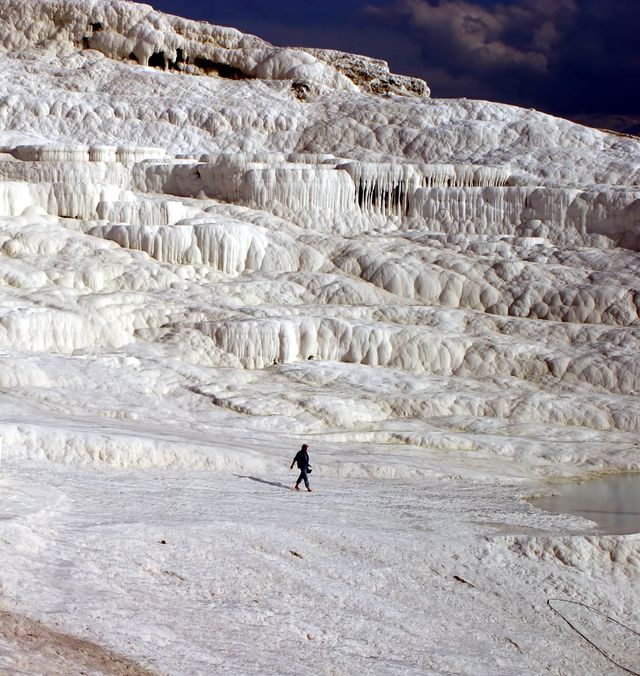
Attraction
Hierapolis Ancient City
Hierapolis, the Greco-Roman spa city above Pamukkale's terraces: what to see and in what order, the theatre, necropolis and Plutonium, the history, and how to visit.
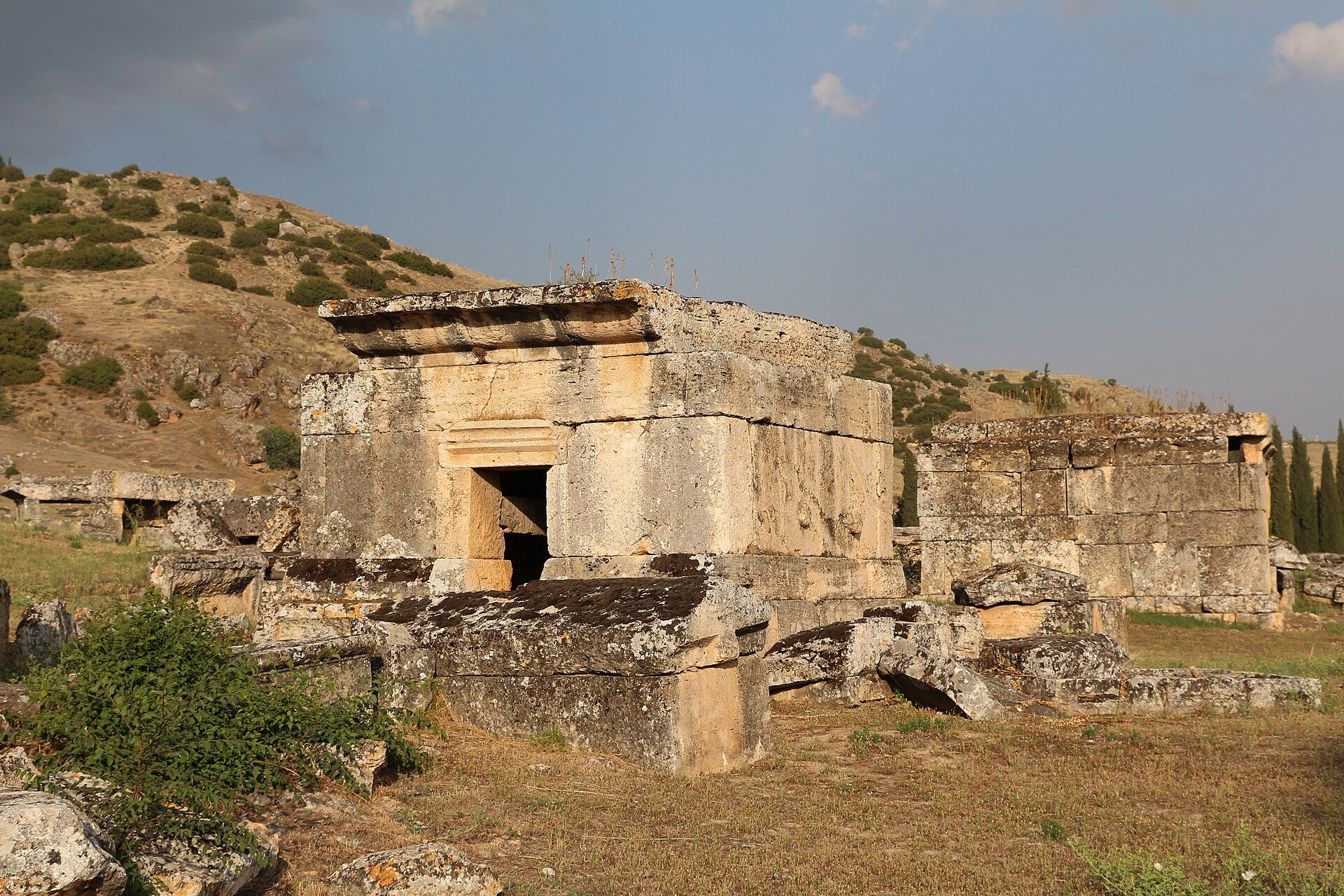
The necropolis of Hierapolis at Pamukkale, one of the largest ancient cemeteries in Anatolia: its tombs, who's buried there, and how to walk it.
Last updated:Most ancient cities kept their dead outside the walls, lining the roads in and out of town. Hierapolis did the same, but on an unusual scale. Its necropolis stretches for around two kilometres along the routes out of the city, and with well over a thousand tombs it is one of the largest and best-preserved ancient cemeteries in Anatolia. Google Maps reviewers rate it 4.7 out of 5 (584 reviews).
Hierapolis was a spa town, and people came from across the Roman world in the hope that its thermal waters would cure them. Many did not recover. Over the centuries the city buried a steady stream of hopeful visitors alongside its own residents, and the cemetery grew into the sprawl you walk today. That gives the place a quiet, particular atmosphere: this was a town people travelled to in hope, and a great many of them stayed for good. Because the cemetery grew along the roads rather than in one walled plot, it doubled as a grand approach to the city, so ancient travellers arriving from the north passed through the dead before they reached the living.
The tombs span several centuries and styles, which is what makes the walk absorbing rather than grim. You pass plain stone sarcophagi raised on plinths; elaborately carved ones with inscriptions still legible; two-storey house-shaped mausoleums built for wealthy families; and circular stone tumuli, burial mounds covering older Hellenistic graves. Many tombs carry epitaphs naming the dead, and some add a fine or a curse for anyone who dared disturb the burial, an ancient anti-theft clause. One famous inscription records a merchant named Flavius Zeuxis who boasted of sailing to Italy many times in the course of his trade. You are free to wander among the tombs on the paths.
You do not need any archaeology to enjoy it, but a few things reward a closer look. The house-shaped tombs, built like small stone dwellings with doors and pitched roofs, were family monuments meant to be visited, and some had benches where the living could sit and remember. The carved sarcophagi often name their owner and trade, a slice of the working city. And the inscriptions that threaten fines against anyone reusing a grave show that burial space here was valuable, in a town where so many outsiders needed a resting place. One to seek out is the tomb of Flavius Zeuxis, the merchant whose epitaph boasts of his many trading voyages to Italy, among the best known of the monuments here.
The main necropolis lies at the northern end of the site, so the easy way to see it is to enter through the North Gate, which drops you into the cemetery first and lets you walk through it toward the city, the theatre and the terraces. If you come up from the terraces or the South Gate instead, it is a longer walk out to the far end, which is why some visitors skip it, a shame, because it is one of the more evocative corners of Hierapolis and usually one of the quietest.
Give it 30 to 45 minutes to walk a good stretch, longer if you like reading tombs. It is open ground with almost no shade, so a hat, water and sun protection help in summer, and sturdy shoes cope better with the uneven ground. It is covered by the single site ticket that includes all of Hierapolis and the terraces, so there is nothing extra to pay. Pair it with the theatre and the archaeological museum, where some of the finest sarcophagi from these very tombs are now displayed. Read a couple of the epitaphs if you can: even in translation on the site boards, the voices of ordinary Hierapolitans, proud of their families and anxious about their tombs, are what stay with you longest.
It is the ancient cemetery of Hierapolis, one of the largest and best-preserved in Anatolia. Well over a thousand tombs line the roads out of the city for around two kilometres, from simple stone graves to grand house-shaped mausoleums and round burial mounds. Many hold people who came for the thermal cure and never left. It is covered by your site ticket and easiest to walk if you enter from the North Gate.
No, and few people do. It runs a long way along the northern road, so most visitors walk a representative stretch, taking in the range of tomb styles, rather than trying to see every monument. Half an hour on the nearest section gives you the feel of it.
A mix of the city's own residents and the many visitors who travelled to Hierapolis for its thermal cure and died there. Tombs range from ordinary citizens to wealthy families, and one famous inscription records a merchant, Flavius Zeuxis, who boasted of sailing to Italy many times in the course of his trade.
The main necropolis sits at the northern end of the site, so entering through the North Gate drops you into the cemetery first and lets you walk through it toward the city and the terraces. From the terraces or the South Gate it is a long walk out to reach it.
Yes, it is one of the more evocative and usually quietest parts of Hierapolis, and it is covered by the single site ticket, so there is nothing extra to pay. The finest sarcophagi from here are now displayed in the archaeological museum.
Give it 30 to 45 minutes to walk a good stretch, longer if you like reading the tombs and their inscriptions. It is open ground with little shade, so take a hat and water in summer.
Attraction
Hierapolis, the Greco-Roman spa city above Pamukkale's terraces: what to see and in what order, the theatre, necropolis and Plutonium, the history, and how to visit.
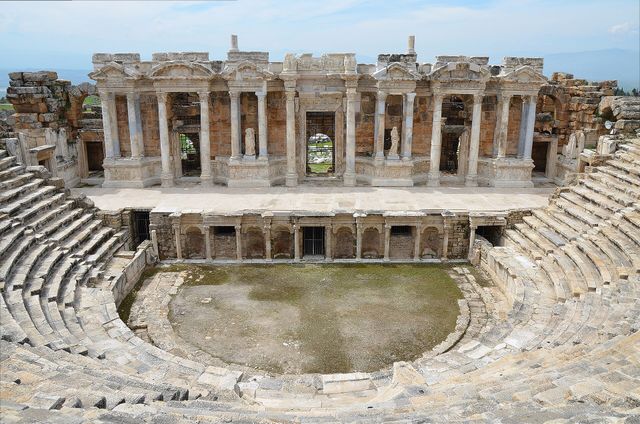
Attraction
The Roman theatre of Hierapolis above Pamukkale, one of the best-preserved in Turkey: its history, the carved stage, and what to see.
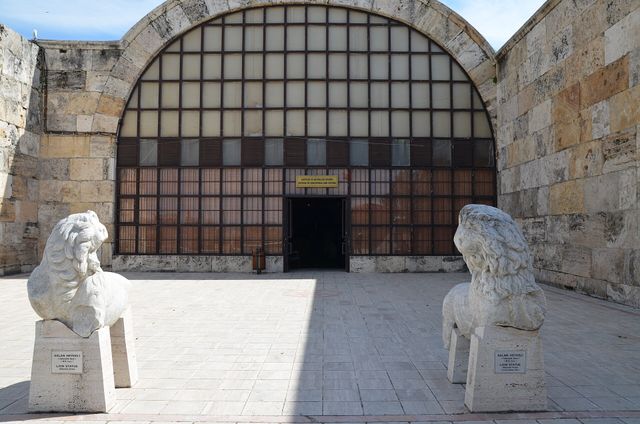
Attraction
The Hierapolis Archaeological Museum at Pamukkale, Roman sculpture, sarcophagi and theatre reliefs, housed in restored ancient Roman baths.