
Attraction
Hierapolis Ancient City
Hierapolis, the Greco-Roman spa city above Pamukkale's terraces: what to see and in what order, the theatre, necropolis and Plutonium, the history, and how to visit.
The Roman theatre of Hierapolis above Pamukkale, one of the best-preserved in Turkey: its history, the carved stage, and what to see.
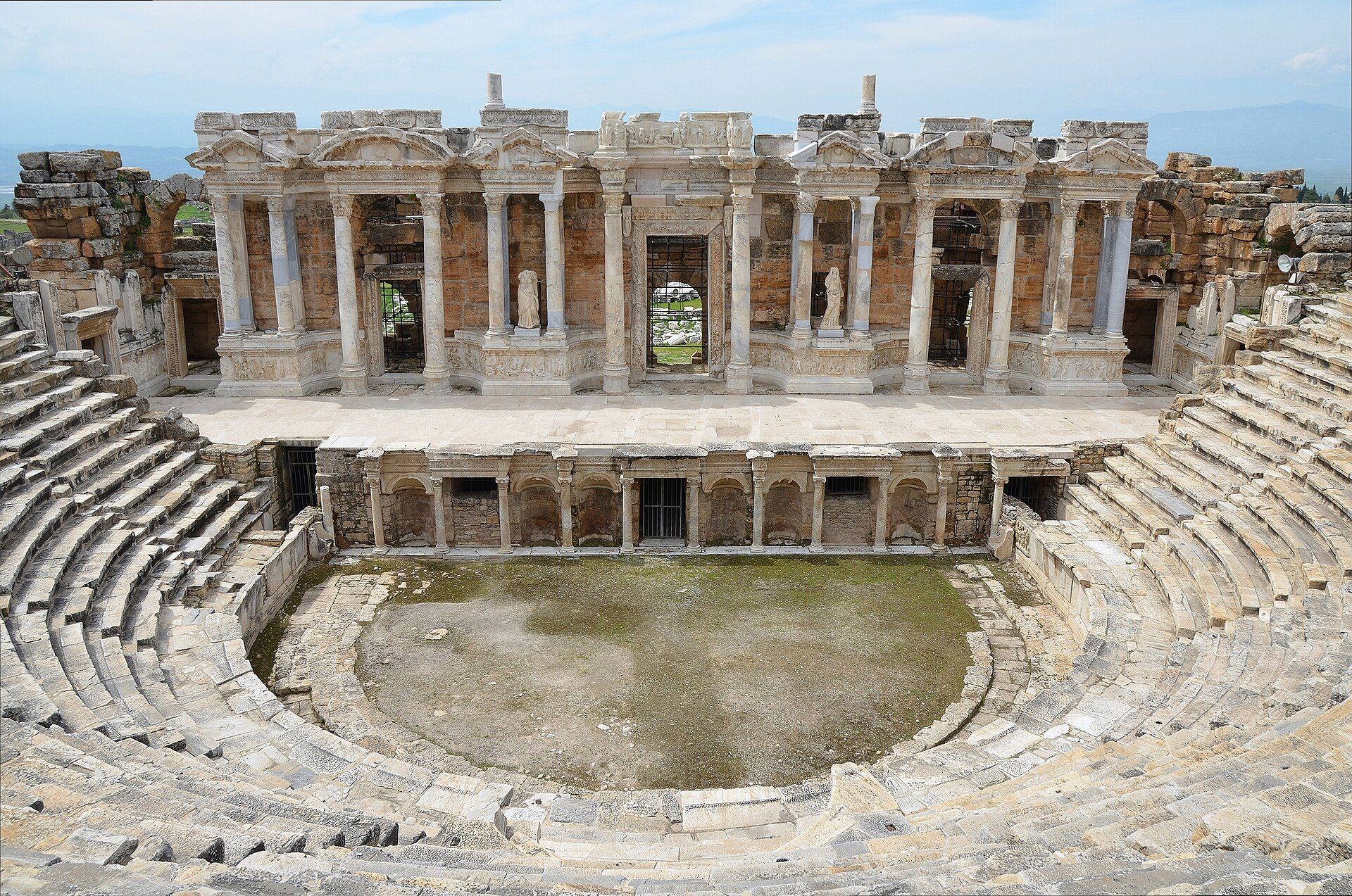
Last updated:The theatre is the high point of a visit to Hierapolis, in both senses. It is cut into the hillside above the ruins, and it is the best-preserved structure on the site, widely rated one of the finest Roman theatres anywhere in Turkey. Google Maps reviewers give it 4.9 out of 5 (4,478 reviews), the highest score of anything at Pamukkale, and standing inside it you understand why.
The theatre is a steep semicircle of stone benches set into the slope, estimated to have seated somewhere between 12,000 and 15,000 people (estimates vary). What sets it apart is the stage building behind the orchestra, the scaenae frons: a tall, multi-storey wall carved with columns, niches and friezes of gods and mythological scenes. Much of it still stands, and the quality of the carving is extraordinary for its age. Some of the very finest reliefs have been moved into the archaeological museum for protection, but a great deal remains in place, so you can read the decoration from your seat. The friezes tell stories: panels of Apollo, the city’s patron god, and the huntress Artemis run across the stage front alongside scenes of myth and procession, and later Roman work wove the imperial family into the design. It rewards patience, because the longer you look the more figures resolve out of the stone.
The structure you see was built in the 2nd century AD under the emperor Hadrian, on the footprint of an earlier Hellenistic theatre, then richly redecorated around AD 200 under Septimius Severus, whose family appears in some of the carvings. So the standing building is roughly 1,900 years old, with its origins reaching further back still. It stayed in use for centuries and, like many Roman theatres, was later adapted for the broader spectacles Roman audiences came to expect, not just drama and music. A long modern restoration by an Italian archaeological mission has stabilised the seating and pieced the stage back together, which is why it presents so well today.
Climb the seating, it is allowed and it is the whole point. From the upper rows you get the classic Hierapolis view: the curve of the cavea falling away below you, the carved stage in front, and beyond it the ruins running down to the white terraces and the valley. It is one of the best photo spots on the site. The stage area itself is sometimes fenced to protect the carvings, so you admire it from above rather than walking across it.
Sit down for a few minutes rather than photographing it and moving on. From the upper rows the whole shape of the place resolves: the sweep of the seating, the carved stage below, and the ruins falling away to the white terraces beyond. In the shoulder seasons you may have entire rows to yourself. It is preserved for looking rather than performing, so unlike some restored Turkish theatres it is not a regular festival venue, though the authorities stage the occasional special event here.
It is a short visit, 20 to 30 minutes, and it is covered by the single site ticket that includes all of Hierapolis and the terraces. There is no shade in the seating, so the climb is hot and the stone glares at midday; late afternoon brings softer light onto the stage, cooler stone underfoot and better photographs. To find it, follow the main path uphill from the terraces or the museum; it is signposted and sits above the central ruins, a short climb from the Ploutonion and the path up to the Martyrium of St Philip, so it slots naturally into a loop around Hierapolis before or after the terraces below.
The theatre you see was built in the 2nd century AD under the emperor Hadrian, on the site of an earlier Hellenistic one, then richly redecorated around AD 200 under Septimius Severus. So the standing structure is roughly 1,900 years old, with parts of the design going back further.
Yes. You can walk in and climb the stone seating for the view down over the stage and across the ruins to the terraces. The ornately carved stage building is sometimes roped off to protect the reliefs, so you admire it from the seats rather than walking the stage. Entry is covered by your site ticket.
Estimates vary, but it is thought to have held somewhere between 12,000 and 15,000 spectators across its steep semicircle of stone benches, a scale that reflects how important Hierapolis was in the Roman period.
The tall stage wall, the scaenae frons, is carved with columns, niches and friezes of gods, mythological scenes and the imperial family. Some of the very finest reliefs have been moved into the archaeological museum for protection, but a great deal is still in place to see from the seats.
Yes. It is covered by the single Hierapolis-Pamukkale site ticket that also includes the terraces and the museum, so there is nothing extra to pay at the theatre.
Late afternoon is best: the light falls onto the carved stage, the stone is cooler underfoot and the photographs are better. There is no shade in the seating, so midday is hot. Allow 20 to 30 minutes.
Attraction
Hierapolis, the Greco-Roman spa city above Pamukkale's terraces: what to see and in what order, the theatre, necropolis and Plutonium, the history, and how to visit.
Attraction
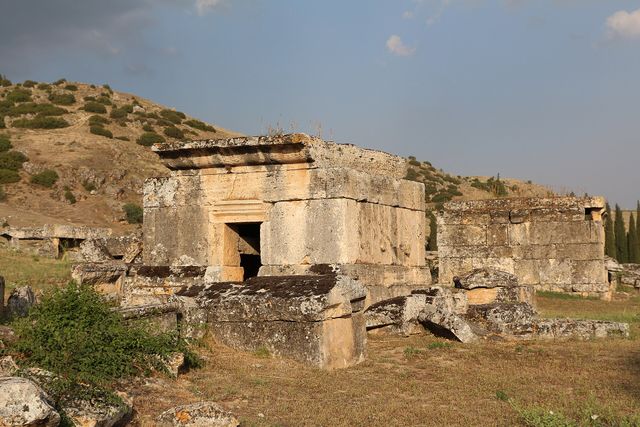
The necropolis of Hierapolis at Pamukkale, one of the largest ancient cemeteries in Anatolia: its tombs, who's buried there, and how to walk it.
Attraction
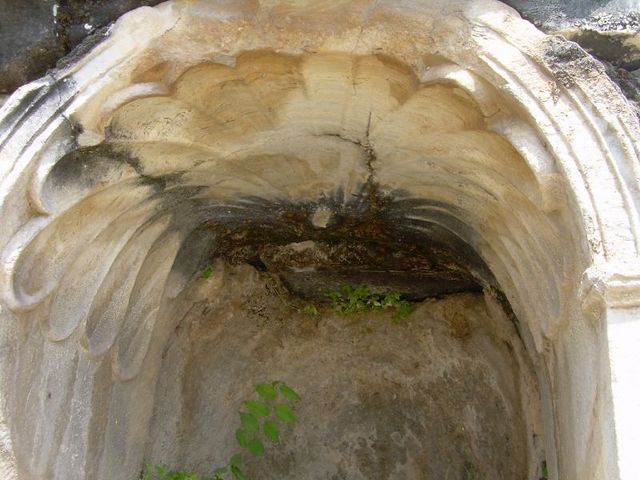
The Ploutonion at Hierapolis, Pamukkale, the ancient 'Gate to Hell' beside the theatre, its deadly gas, the priests' trick, and the legend behind it.