
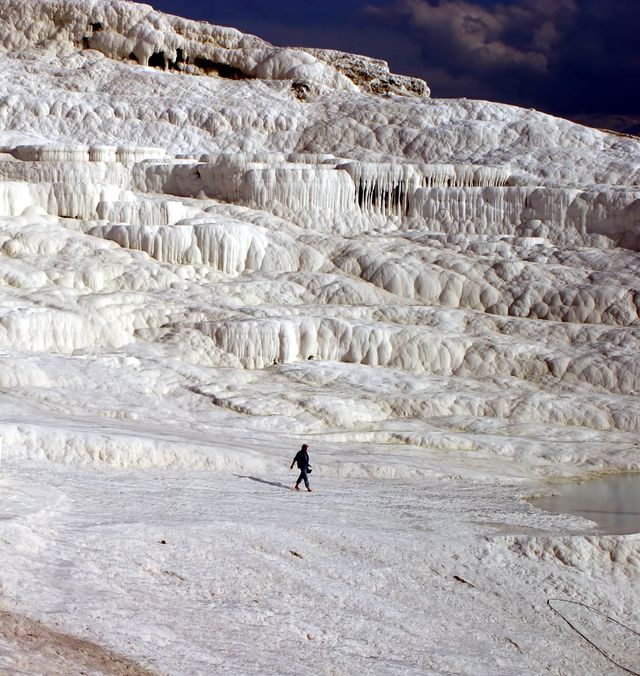
Attraction
Hierapolis Ancient City
Hierapolis, the Greco-Roman spa city above Pamukkale's terraces: what to see and in what order, the theatre, necropolis and Plutonium, the history, and how to visit.
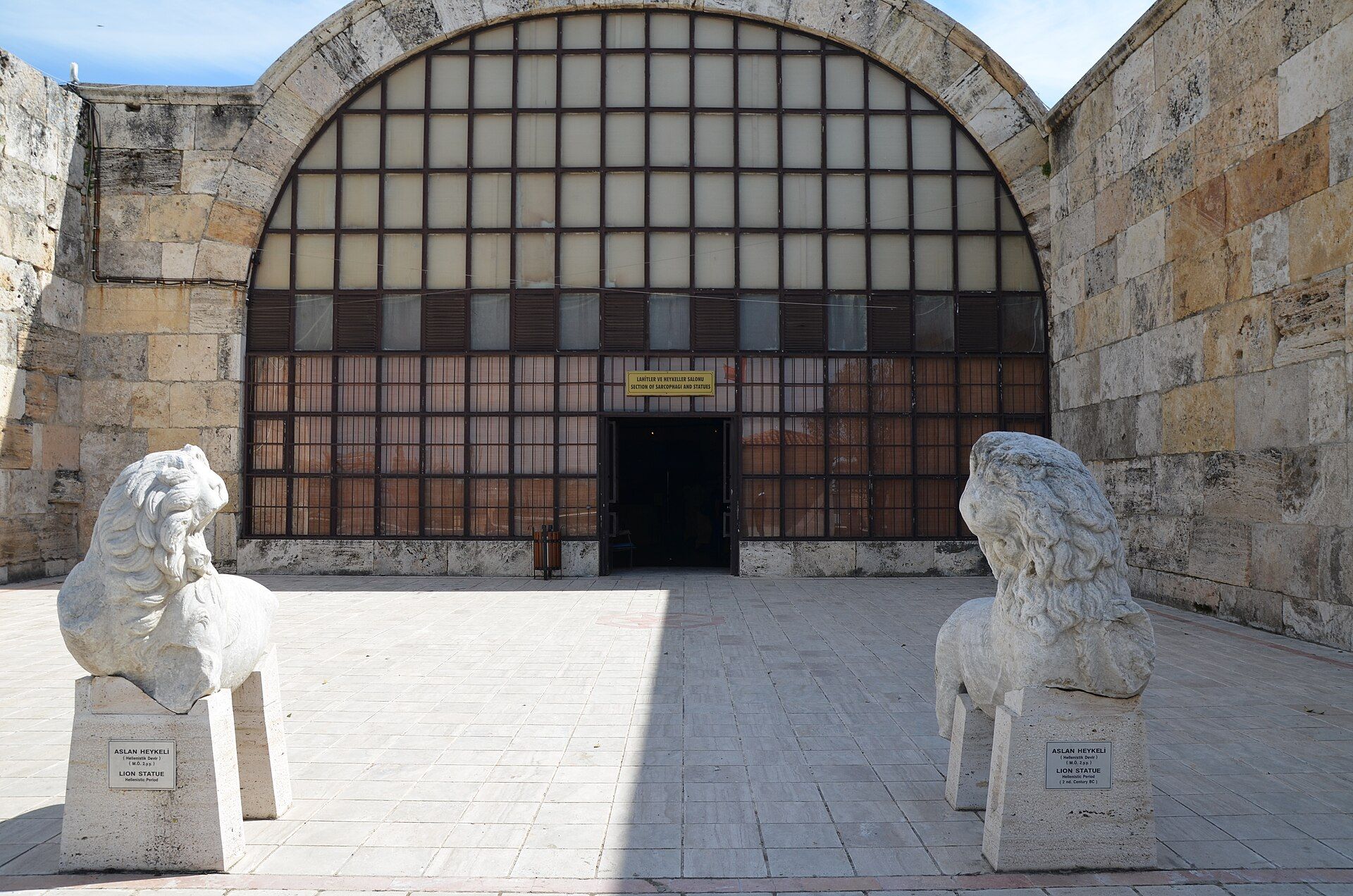
The Hierapolis Archaeological Museum at Pamukkale, Roman sculpture, sarcophagi and theatre reliefs, housed in restored ancient Roman baths.
Last updated:It is easy to walk straight past the museum on the way to the terraces, but it is worth half an hour, and on a hot afternoon it may be the most comfortable half-hour of your visit. The Hierapolis Archaeological Museum is set inside the city’s restored 2nd-century Roman baths, a fitting home for the best statues and carvings pulled from the ruins around it. Google Maps reviewers rate it 4.6 out of 5 (1,182 reviews).
The building itself is part of the exhibit. These were the great thermal baths of Hierapolis, vast vaulted stone halls where Romans took the mineral waters, now cleaned up and roofed to shelter the collection. Walking through, you get a sense of the scale Roman public architecture worked at before you have looked at a single sculpture, and it makes the museum feel like a continuation of the site rather than a break from it. The baths date from the 2nd century AD, the same wave of building that gave Hierapolis its theatre, and they were among the largest structures in the city; after excavation the vaulted halls were restored and adapted to display the finds, so the museum occupies a setting that is itself nearly two thousand years old.
The collection is arranged across three main halls, each with its own focus.
The tomb finds come from the vast necropolis outside the city: beautifully carved sarcophagi, some with reclining figures on their lids and detailed mythological reliefs, along with the grave goods that show how Hierapolis buried its dead. Several of the finest were lifted from the grandest tombs in the cemetery, so the museum and the necropolis outside end up telling two halves of one story.
The theatre sculptures are the highlight. These are the marble reliefs and statues lifted from the theatre’s ornate stage building and brought here for protection, gods, emperors and mythological scenes carved in crisp detail you simply cannot appreciate from the theatre seating.
The small finds round it out: coins, glass, jewellery, oil lamps, inscriptions and everyday objects from Hierapolis and nearby sites including Laodicea, the kind of ordinary pieces that put real lives beside the grand architecture.
Give the theatre reliefs the most time: the carved panels, among them the city’s patron god Apollo and scenes of myth, are the finest surviving work from the stage building, and seeing them at eye level is the whole point of the museum. Among the tomb finds, look for the sarcophagi with reclining figures on their lids, a common Roman way of picturing the dead at an eternal banquet. The small-finds hall is easy to rush, but the coins, glass and jewellery are what make the ancient city feel lived-in rather than monumental.
Allow 30 to 45 minutes. The museum is shaded and cool, which makes it the ideal midday stop when the open ruins and white terraces are at their hottest and brightest, a bit of shelter built into the middle of your day. It sits centrally among the ruins, close to the theatre and the heart of Hierapolis, so it is easy to fold into your loop. The museum is included in the single Pamukkale site ticket of about €30, so there is nothing extra to pay at the door. It keeps broadly the site’s hours, roughly 08:00 to 18:00 in winter and later in summer, though it can close a little earlier than the terraces, so it is better saved for the middle of the day than the very end. One thing to plan around: as a state museum it is closed on Mondays, though the terraces and the archaeological site itself stay open daily, so save the museum for another day of your visit. Photography is generally allowed. Either way it is one of the more rewarding, and coolest, half-hours at Pamukkale.
It holds the best finds from the site: Roman statues and carved sarcophagi from the necropolis, intricate marble reliefs rescued from the theatre's stage building, and smaller artefacts like coins, glass and jewellery. The collection fills three halls of the restored Roman baths. It is a cool, shaded break in a hot site, takes about half an hour, and is covered by your site ticket.
Yes. It is covered by the single Pamukkale site ticket of about €30, the same ticket that admits you to the terraces and Hierapolis, so there is nothing extra to pay to go in.
About 30 to 45 minutes. It is a manageable size, arranged across three halls, so you can see the highlights without it eating into your terrace time.
Yes, on two counts. It gathers the finest carvings from the site, especially the theatre reliefs you cannot see up close from the seating, and it is shaded and cool, which makes it the ideal escape when the open ruins and terraces are at their hottest.
It sits centrally among the ruins, close to the theatre, inside the city's restored 2nd-century Roman baths. Because it is roofed and shaded, it is the most comfortable half-hour of the day when the sun is high and the white terraces are glaring.
The standouts are the marble reliefs and statues moved here from the theatre's stage building for protection, and the elaborately carved sarcophagi drawn from the necropolis.
Attraction
Hierapolis, the Greco-Roman spa city above Pamukkale's terraces: what to see and in what order, the theatre, necropolis and Plutonium, the history, and how to visit.
Attraction
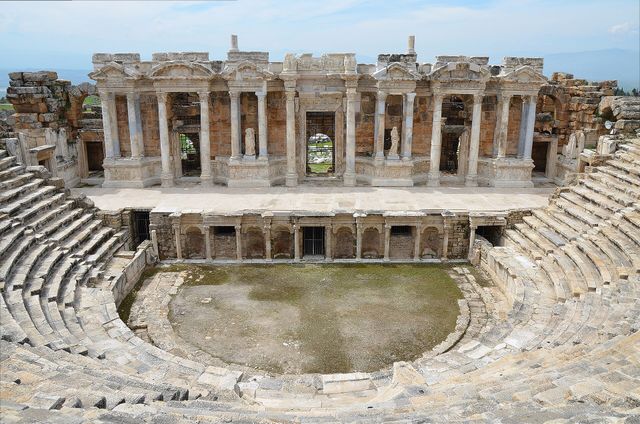
The Roman theatre of Hierapolis above Pamukkale, one of the best-preserved in Turkey: its history, the carved stage, and what to see.
Attraction
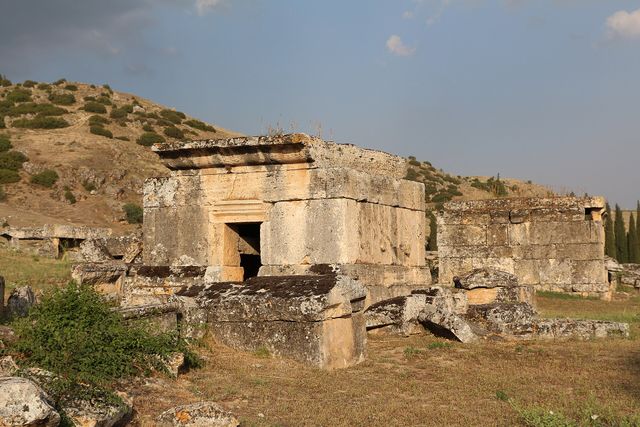
The necropolis of Hierapolis at Pamukkale, one of the largest ancient cemeteries in Anatolia: its tombs, who's buried there, and how to walk it.