
Attraction
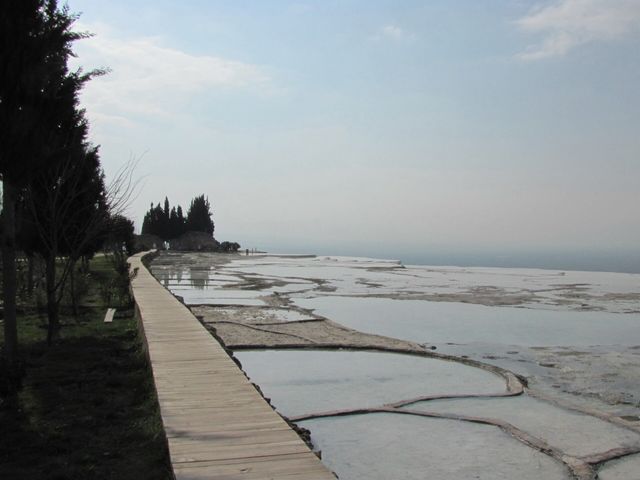
The Travertines of Pamukkale
Pamukkale's white travertine terraces: the can-you-swim rules, the barefoot policy, why some pools are dry, the best time of day, and how to visit.
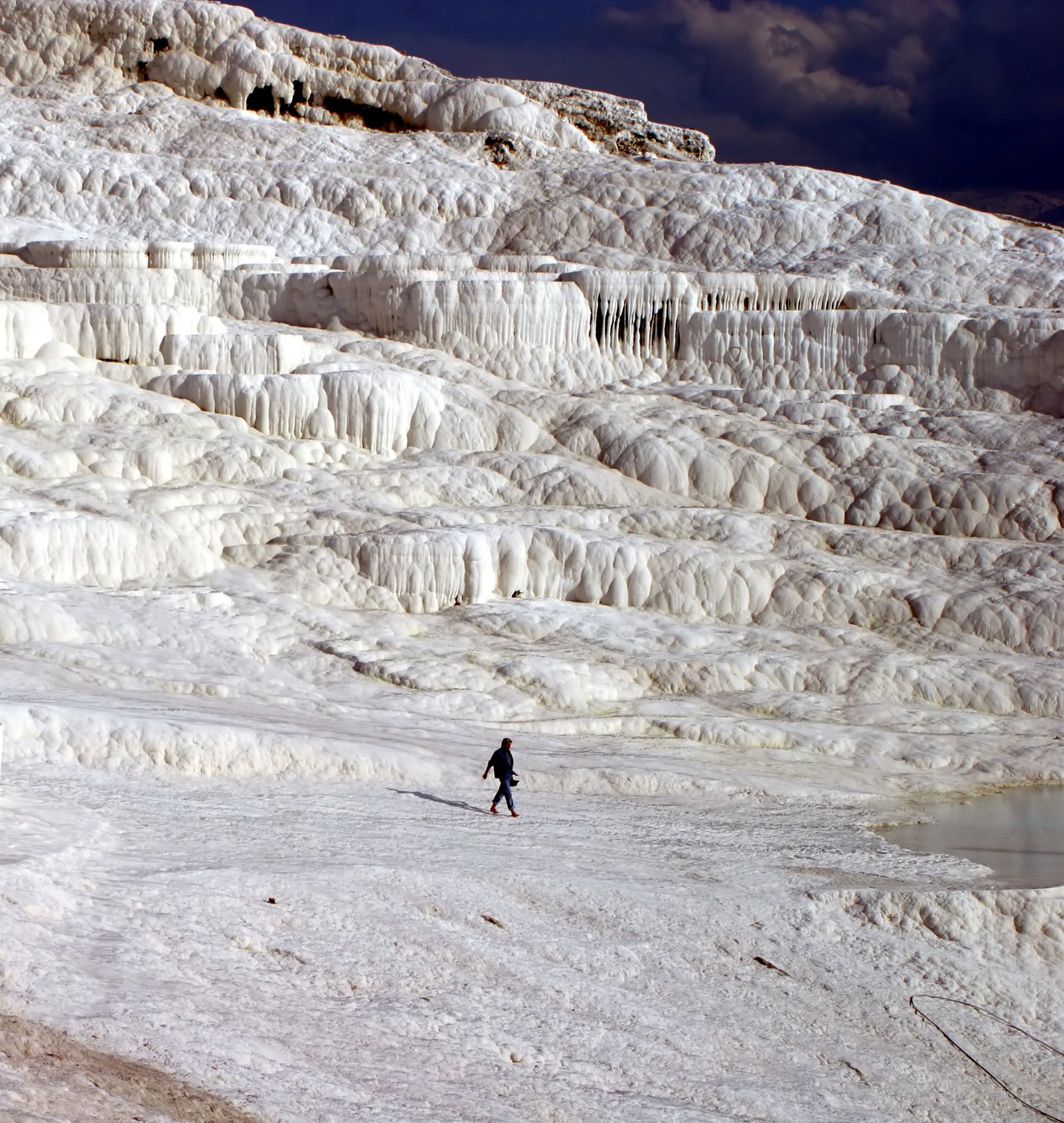
Hierapolis, the Greco-Roman spa city above Pamukkale's terraces: what to see and in what order, the theatre, necropolis and Plutonium, the history, and how to visit.
Last updated:Most people climb to Pamukkale for the white terraces and are caught off guard by what’s waiting on top: a sprawling ancient city, large enough to spend a half-day in on its own. Hierapolis was a Greco-Roman spa town where people came to bathe in the thermal waters, and it’s remarkably intact. It shares the €30 site ticket with the terraces, so you’ve already paid to see it. Skip it and you’ve left half your ticket on the table. Google Maps reviewers rate it 4.8 out of 5 (16,564 reviews), which is about as high as big archaeological sites get.
Hierapolis was founded around 190 BC by the kings of Pergamon, then absorbed by Rome. Earthquakes flattened it more than once, most destructively under Nero in AD 60, and each time it was rebuilt grander, which is why most of what stands today is Roman. The thermal springs were the whole economy: people came to take the waters, to be cured, and often to be buried near them. The city thrived into the Byzantine era, became an important early Christian centre, and was finally abandoned after a major earthquake in 1354. It was inscribed, together with the terraces, as a UNESCO World Heritage Site in 1988.
The site is big and exposed, so plan a loop rather than wandering. A sensible order, starting from the terraces:
The ancient theatre is the showpiece, cut into the hillside and restored enough that you can climb the seating and look out over the whole site. Don’t rush this one.
From there, walk up to the Martyrium of St Philip and the nearby church, the spot tradition ties to the apostle’s death. The walk is uphill and unshaded, but the view back over Hierapolis and the terraces is the best on the site.
Back down, the Frontinus Street colonnade was the city’s main artery, running between two monumental gates. Off it lie the agora, the Roman baths (now the museum), and the small but unsettling Ploutonion, the cave the Romans called a gateway to the underworld.
Finally, the necropolis spreads out along the road toward the North Gate, hundreds of tombs in every style, one of the largest ancient cemeteries anywhere. If you entered from the North Gate, you’ll have walked through it first, which works just as well in reverse.
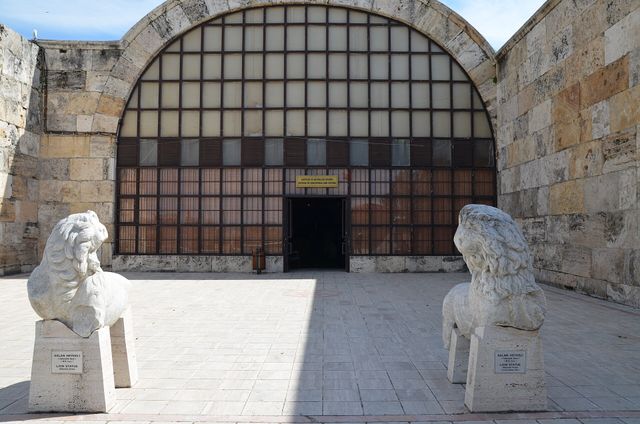
The archaeological museum, housed in the old Roman bath complex, is worth 30 minutes for the sarcophagi and statuary pulled from the site.
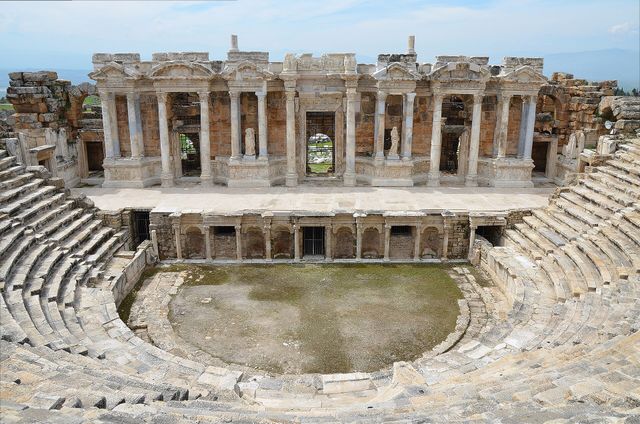
The theatre is the single best-preserved structure here, seating somewhere between 12,000 and 15,000 spectators across a steep curve of stone, with an elaborately carved stage building still partly standing. From the top rows you get the postcard view of the ruins running down toward the white terraces. Full detail on the theatre page.
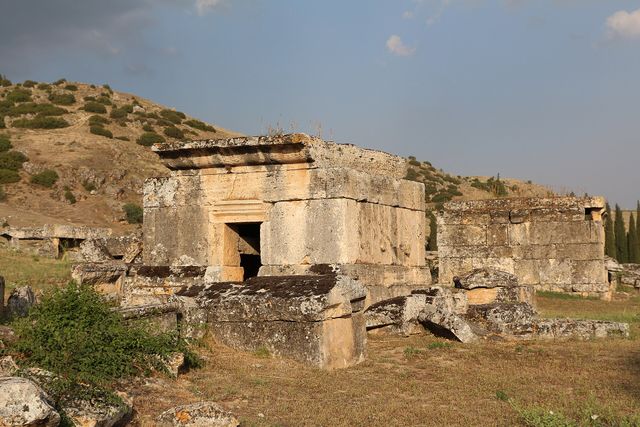
Stretching for over a kilometre, the necropolis holds more than a thousand tombs, from simple stone boxes to house-shaped mausoleums and circular tumuli. Many belonged to people who travelled to Hierapolis hoping the waters would cure them and didn’t recover, which gives the place a particular weight. More on the necropolis page.
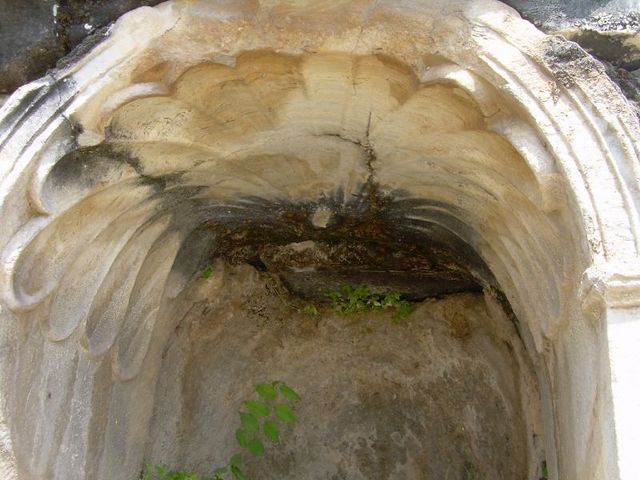
A small grotto beside the temple of Apollo vents carbon dioxide from the geology below, enough to kill birds and animals that stray too close. Roman priests used the lethal gas as a piece of theatre, leading sacrificial animals to the threshold while standing safely above the heavy gas themselves. Re-excavated by archaeologists in 2013 (it was first found in the 1960s), it’s modest to look at but one of the strangest stories on the site. See the Plutonium page.
Hierapolis is included in the single €30 Hierapolis-Pamukkale ticket, with nothing extra to pay (see tickets and gates). Give it two to three hours, more if you read every information board. It’s hot and largely shadeless, so come early or late, carry water, and wear a hat. If you enter from the North Gate you’ll see the ruins first and reach the terraces after; from the South or Town gates you’ll do the terraces first and the city second. Either order works. Pair it with the travertines and a swim in Cleopatra’s Pool for a full day.
Yes. Hierapolis is one of the best-preserved ancient cities in Turkey, and it's included in your Pamukkale ticket, so there's no reason to skip it. The Roman theatre, the vast necropolis and the Plutonium 'gate to hell' are real highlights. Google Maps reviewers rate it 4.8 out of 5 (16,564 reviews). Allow two to three hours.
Hierapolis sits within the modern site of Pamukkale, in Denizli province, southwest Turkey. There's no separate modern town on the ruins; the nearest settlement is Pamukkale village at the foot of the terraces. The ancient city and the white terraces are one combined UNESCO World Heritage Site.
Hierapolis appears once in the New Testament, in Paul's letter to the Colossians (4:13), named alongside neighbouring Laodicea and Colossae as a place with an early Christian community. Tradition holds that Philip the Apostle was martyred and buried here, and a martyrium built in his memory still stands on the hillside.
The most famous burial is Philip the Apostle, commemorated by the Martyrium of St Philip above the city. Beyond that, the necropolis holds well over a thousand tombs of residents and visitors who came for the thermal cure and died here, making it one of the largest ancient cemeteries in Anatolia.
It was founded around 190 BC by the kings of Pergamon, then absorbed by Rome. Earthquakes levelled it more than once, most destructively in AD 60, and each time it was rebuilt grander, which is why most of what stands today is Roman. It thrived into the Byzantine era and was finally abandoned after a major earthquake in 1354, then inscribed with the terraces as a UNESCO World Heritage Site in 1988.
It depends on the order you want. The North Gate drops you at the necropolis and ruins first, reaching the terraces at the end; the South and Town gates put you on the terraces first and the city second. Either works, since the site is a loop. All of Hierapolis is covered by the single €30 Hierapolis-Pamukkale ticket, so there is nothing extra to pay whichever gate you choose.
Attraction
Pamukkale's white travertine terraces: the can-you-swim rules, the barefoot policy, why some pools are dry, the best time of day, and how to visit.
Attraction
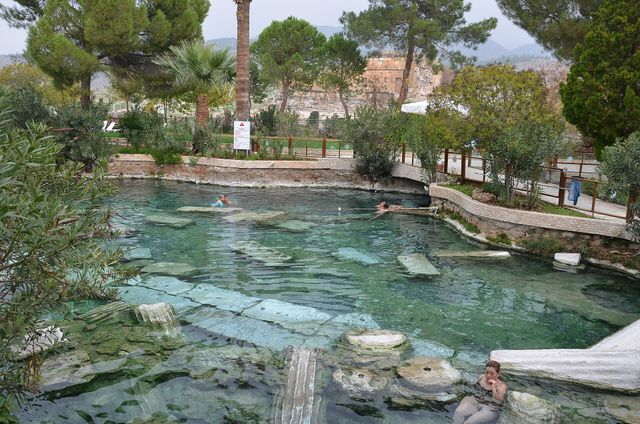
Swim among sunken Roman columns at Pamukkale's Cleopatra's Antique Pool: the separate price, what's included, the history behind the name, and whether it's worth it.
Attraction
The Roman theatre of Hierapolis above Pamukkale, one of the best-preserved in Turkey: its history, the carved stage, and what to see.
Attraction
The necropolis of Hierapolis at Pamukkale, one of the largest ancient cemeteries in Anatolia: its tombs, who's buried there, and how to walk it.
Attraction
The Ploutonion at Hierapolis, Pamukkale, the ancient 'Gate to Hell' beside the theatre, its deadly gas, the priests' trick, and the legend behind it.
Attraction
The Hierapolis Archaeological Museum at Pamukkale, Roman sculpture, sarcophagi and theatre reliefs, housed in restored ancient Roman baths.