
Attraction
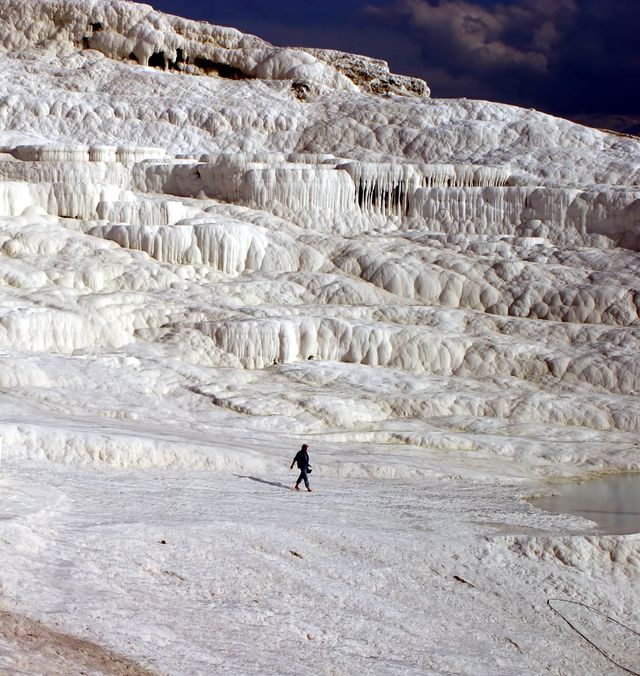
Hierapolis Ancient City
Hierapolis, the Greco-Roman spa city above Pamukkale's terraces: what to see and in what order, the theatre, necropolis and Plutonium, the history, and how to visit.
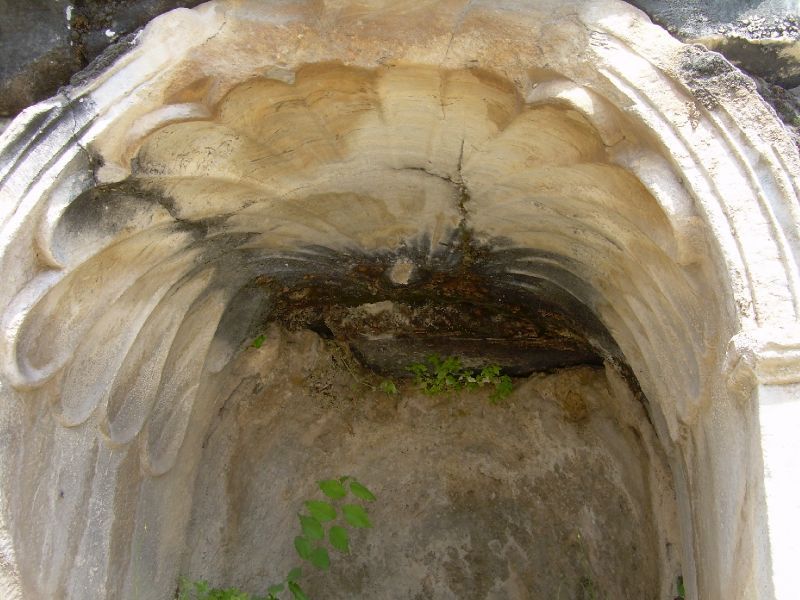
The Ploutonion at Hierapolis, Pamukkale, the ancient 'Gate to Hell' beside the theatre, its deadly gas, the priests' trick, and the legend behind it.
Last updated:Of all the ruins at Hierapolis, this is the one that sticks with you. The Ploutonion, or Pluto’s Gate, was a shrine to the god of the underworld, built over a cave that breathes out poison. The Romans thought it a literal entrance to hell, and to be fair to them, it does kill things. Google Maps reviewers rate it 4.8 out of 5 (62 reviews).
A geological fault runs directly beneath Hierapolis, and it vents carbon dioxide from deep underground. Carbon dioxide is heavier than air, so it pools in a thick, invisible layer at ground level inside and around the mouth of the cave, especially in the still air of early morning and at night. Birds that fly through it drop; small animals that wander in suffocate. The ancients had no concept of carbon dioxide, so they read the deadly, invisible breath as the exhalation of the underworld and built a sanctuary to Pluto over the spot. Modern measurements have confirmed the gas is real, concentrated, and still lethal to animals at ground level today. It is not only birds: insects and small mammals that stray into the layer are overcome as well, and the effect is strongest in the calm air of dawn, when no breeze disperses it, which is precisely when the ancient rituals were staged.
Ancient writers, the geographer Strabo among them, described the scene, and it was pure theatre. Castrated priests of the mother-goddess Cybele would lead bulls and other animals to the opening, where the creatures staggered and died in the gas, proof, to the watching pilgrims, of the gods’ power and the priests’ special protection. The secret was simple physics. The lethal gas layer sat low to the ground; a man standing upright kept his head and lungs in clean air above it, while the animals, breathing lower down, did not. The priests may also have known the safest times and spots to stand. Either way it was a grim, clever piece of stagecraft that drew paying pilgrims for centuries.
The sanctuary faded from memory and was lost for a long time. It was relocated in the 1960s and then properly re-excavated and studied in 2013 by an Italian archaeological team, who mapped the structure, the stepped seating where spectators once watched, and confirmed with instruments that the carbon dioxide still kills small animals brought too close, exactly as the ancient accounts claimed.
The Ploutonion was not a sideshow but a working shrine. It stood beside a temple of Apollo, the city’s patron, and drew pilgrims who came to witness the sacrifice and carry away a story. For a spa city already full of the sick and the hopeful, a visible gateway to the underworld, guarded by priests who seemed to walk out of it unharmed, was a powerful thing to see. That mix of real geology and staged wonder is what makes the place feel at once like an ancient con and a genuine sacred site.
The Ploutonion sits just below the theatre, beside the remains of the Temple of Apollo. For obvious safety reasons it is fenced, so you view the cave opening and the seating from behind a railing rather than stepping down to it. You cannot go in, and you should not want to. Ten to fifteen minutes is plenty, but do not skip it, because it is the strangest true story at Pamukkale. It is covered by the single site ticket, and it is a two-minute walk from the theatre as you tour the rest of Hierapolis.
It was an ancient shrine to Pluto, god of the underworld, built over a cave that vents toxic carbon dioxide from the fault below. The heavy gas pools at ground level and still kills birds that fly too low. Roman-era priests used it as theatre, leading animals to die at the threshold while they stood safely above the gas. It sits just below the theatre, you view it from a railing, and it takes only ten minutes, but the story is one of the most memorable at Pamukkale.
Yes, to animals at ground level, where the carbon dioxide is most concentrated, as modern measurements have confirmed. Visitors are safe because the site is fenced and you stay behind a railing well back from the cave mouth, with your head far above the low gas layer.
Simple physics. Carbon dioxide is heavier than air, so the lethal layer sat low to the ground. A priest standing upright kept his head and lungs in clean air above it, while the animals, breathing lower down, took in the gas and collapsed.
No. For obvious safety reasons the cave and its stepped seating are fenced off, so you view them from behind a railing. You cannot enter, and you should not want to.
The sanctuary was lost for centuries, relocated in the 1960s, and then properly re-excavated and studied in 2013 by an Italian archaeological team, who mapped the structure and confirmed with instruments that the gas is still lethal to small animals.
It sits just below the theatre, beside the remains of the Temple of Apollo, a two-minute walk from the theatre. Ten to fifteen minutes is plenty, and it is covered by your site ticket.
Attraction
Hierapolis, the Greco-Roman spa city above Pamukkale's terraces: what to see and in what order, the theatre, necropolis and Plutonium, the history, and how to visit.
Attraction
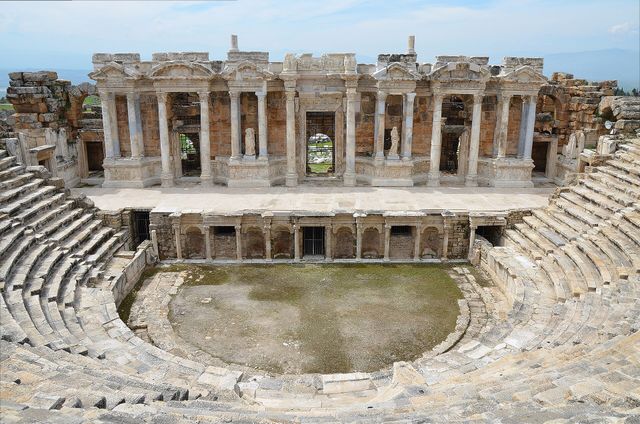
The Roman theatre of Hierapolis above Pamukkale, one of the best-preserved in Turkey: its history, the carved stage, and what to see.
Attraction
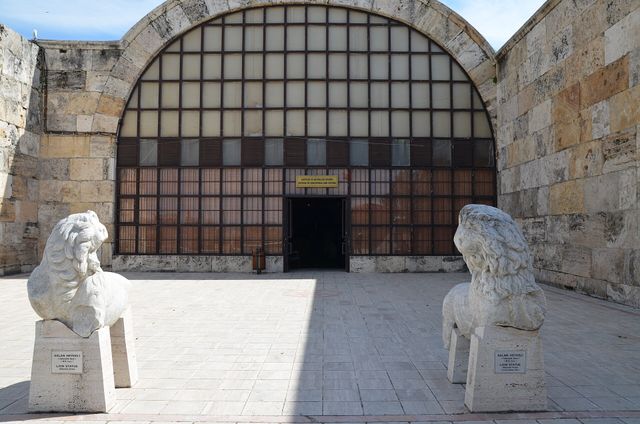
The Hierapolis Archaeological Museum at Pamukkale, Roman sculpture, sarcophagi and theatre reliefs, housed in restored ancient Roman baths.