
Attraction
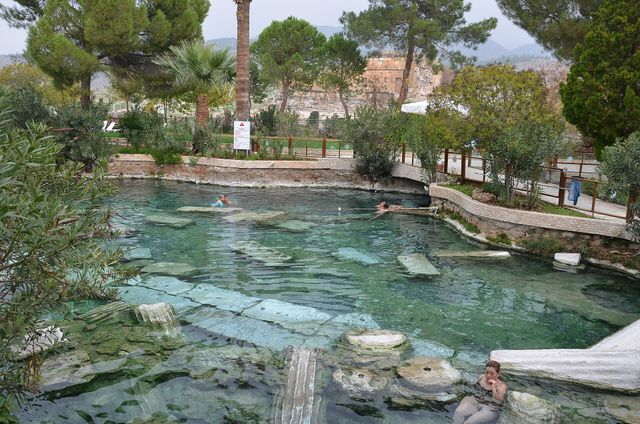
Cleopatra's Antique Pool
Swim among sunken Roman columns at Pamukkale's Cleopatra's Antique Pool: the separate price, what's included, the history behind the name, and whether it's worth it.
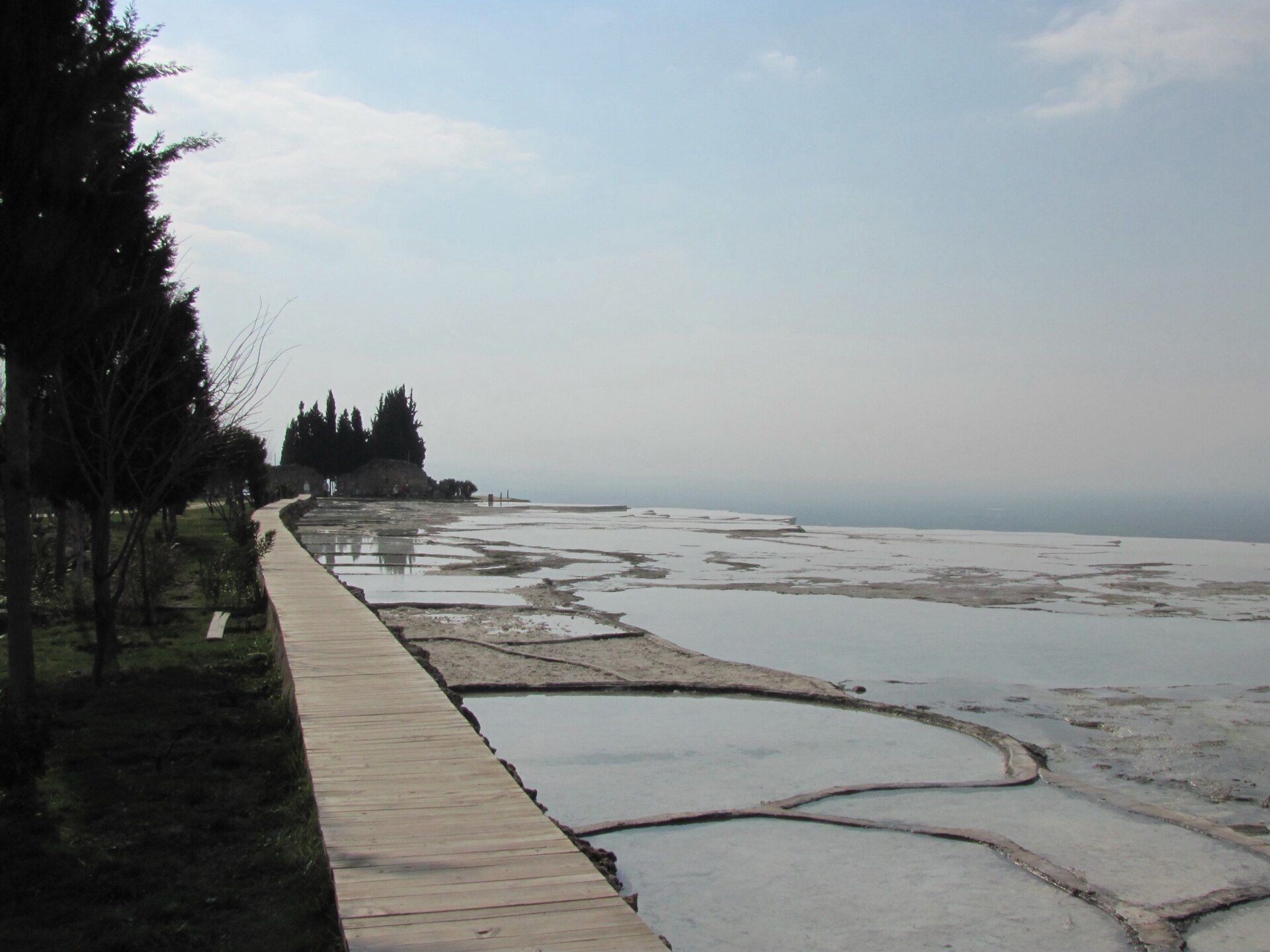
Pamukkale's white travertine terraces: the can-you-swim rules, the barefoot policy, why some pools are dry, the best time of day, and how to visit.
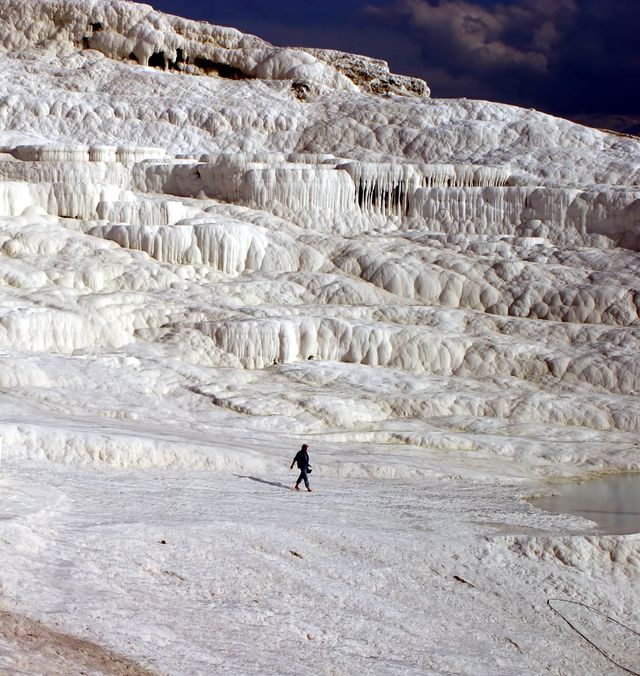
Last updated:From the valley floor, the travertines look like a glacier that wandered into the wrong climate: a white mountainside, 2.7 kilometres long and about 160 metres tall, draped in shelves and basins of pale stone. It’s the reason most people come to Pamukkale, and it earns the trip. Google Maps reviewers rate the terraces 4.3 out of 5 (562 reviews).
Here’s what they are, what you can and can’t do on them, and how to see them at their best.
The terraces are travertine, a rock made of calcium carbonate, the same mineral as chalk and limestone. Hot springs underground dissolve calcium from the bedrock and carry it to the surface. When that water spreads out, cools and meets the air, the calcium comes out of solution and hardens, building up rim by rim, basin by basin, over thousands of years. The water itself looks milky turquoise because of the same suspended minerals.
So the answer to the question people whisper at the top: it’s natural. No one built or carved these. What humans do now is manage the water, which is a different thing.
Yes and no, and the distinction matters. There’s a marked path where you can wade in designated pools, barefoot, and most of those are shallow, ankle to shin deep. It’s lovely to stand in, warm and bright, but it isn’t swimming. Large parts of the terraces are roped off so the calcite can recover and keep forming.
If you want to actually swim, that’s Cleopatra’s Antique Pool a short walk away, where you float among sunken Roman columns in deeper, body-temperature water. It costs a separate fee. The terraces are for wading and photos; Cleopatra’s is for swimming.
Shoes come off before you step onto the travertine, and you carry them. This isn’t a suggestion. Footwear scratches and discolours the soft rock, and the site bans it to protect the formation. It also keeps you safer in a roundabout way, because bare feet grip the wet surface better than soles do.
That said, the rock is genuinely slippery, especially where water runs over it. Walk slowly, plant each foot, and don’t try to hurry the descent. Bring a small dry bag so you’re not juggling shoes, socks and a phone while balancing. Some people find the textured rock a little rough underfoot; it’s manageable, but worth knowing if your feet are sensitive.
You may have seen glowing photos of brimming white pools and then arrived to find whole sections grey and empty. That’s deliberate. The thermal water is rotated across different parts of the slope on a schedule, so each area gets its turn to be flooded and re-whitened while others rest. The reason goes back decades: hotels once tapped the springs for their own pools and the formation started to starve and discolour. The hotels are gone now, and the rotation keeps the calcite healthy.
The practical upshot: you’re not guaranteed any specific pool will be full on your day, but there will always be active, water-filled terraces somewhere on the slope. Ask staff or simply follow where the water is running.
Two windows beat the rest. Get there at opening (06:30 in summer, 08:00 in winter) and you’ll have soft light and few people before the coaches arrive mid-morning. Or come for late afternoon, when the day-trippers leave, the heat drops, and the low sun turns the white warm and the pools deep blue. Sunset is the best light of the day. Midday is the worst of both crowds and flat overhead glare. There’s more detail on the best time to visit page.
The classic view, the one in every photo, looks back across the stacked pools toward the valley, best from the upper terraces in the late afternoon. Bring a cloth to wipe your lens; the mineral mist gets on everything.
The terraces are covered by the single €30 Hierapolis-Pamukkale site ticket, so there’s nothing extra to pay to walk them (Cleopatra’s Pool is the exception). Which gate you choose changes your approach: the Town Gate puts you at the bottom for the barefoot walk up, the South Gate brings you in near the top with the least climbing. The full breakdown is on the tickets and gates page.
Give the terraces one to two hours, more if you’re stopping to photograph. Most people pair them with Hierapolis on top and a swim in Cleopatra’s Pool to fill a half or full day.
Only in the designated pools along the marked path, and only barefoot. Most terrace pools are shallow, ankle to shin deep, and many are roped off for conservation, so it's wading rather than swimming. For a proper swim, go to Cleopatra's Antique Pool nearby, which charges a separate fee.
Yes. You can still wade in the open terrace pools, though sections are roped off and the water is rotated across the slope, so which pools are full changes day to day. The deeper, year-round swim is in Cleopatra's Antique Pool.
Yes, with care. The thermal water is clean and warm, but the travertine is slippery, so walk slowly and stay barefoot as required. The terrace pools are shallow and fine for supervised children. Don't dive, nothing here is deep enough.
Natural. The white rock is travertine, built up over thousands of years by calcium-rich hot springs that harden as the water cools and meets the air. No one carved or built the terraces. What people do today is manage the water, rotating it across the slope to keep the rock white, which is a different thing from creating the formation.
That is deliberate, not decline. The managers rotate the thermal flow between sections of the slope so each one can rest and rebuild its white surface, which leaves some basins dry and grey on any given day. Somewhere on the slope is always wet and walkable, so follow the running water or ask staff which section is flooded.
Two windows beat the rest: opening (06:30 in summer, 08:00 in winter) for soft light and thin crowds before the coaches arrive, or late afternoon into sunset, when the day-trippers leave, the heat drops and the low sun turns the white warm and the pools deep blue. Midday is the worst of both, with harsh glare and the biggest crowds.
Attraction
Swim among sunken Roman columns at Pamukkale's Cleopatra's Antique Pool: the separate price, what's included, the history behind the name, and whether it's worth it.
Attraction
Hierapolis, the Greco-Roman spa city above Pamukkale's terraces: what to see and in what order, the theatre, necropolis and Plutonium, the history, and how to visit.
Attraction
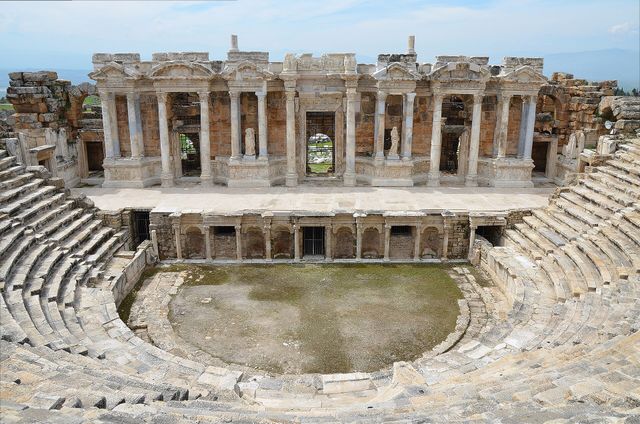
The Roman theatre of Hierapolis above Pamukkale, one of the best-preserved in Turkey: its history, the carved stage, and what to see.