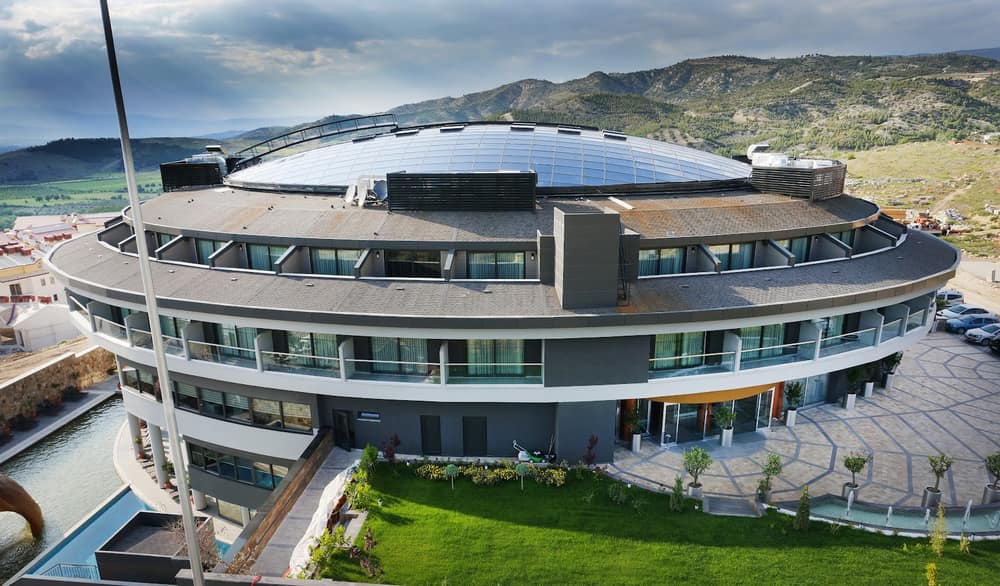
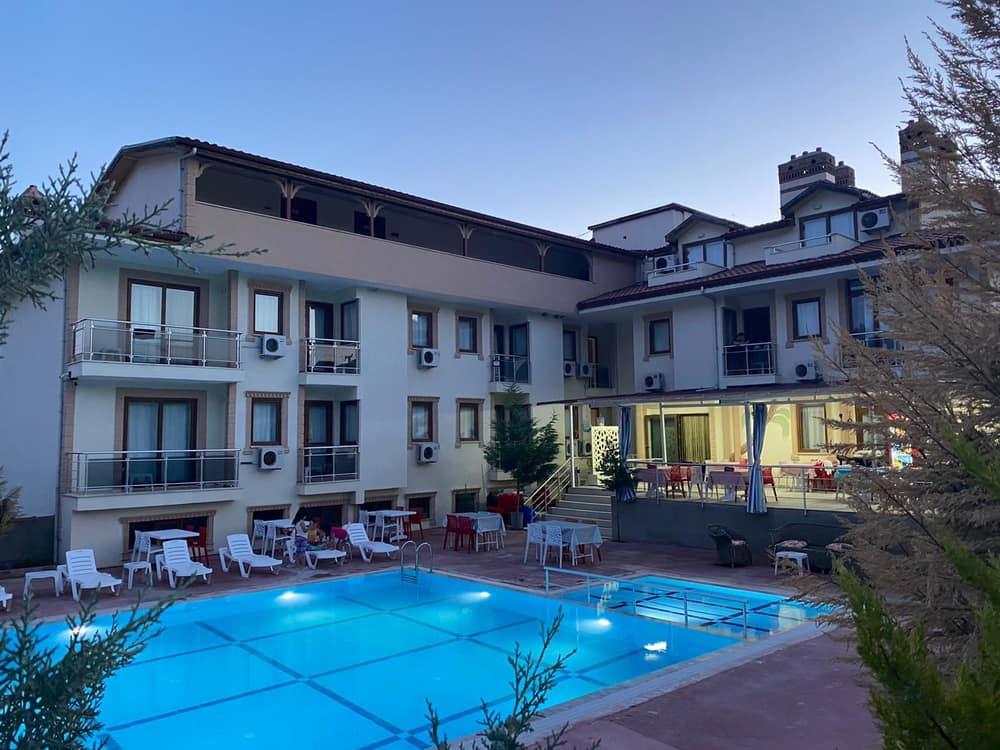
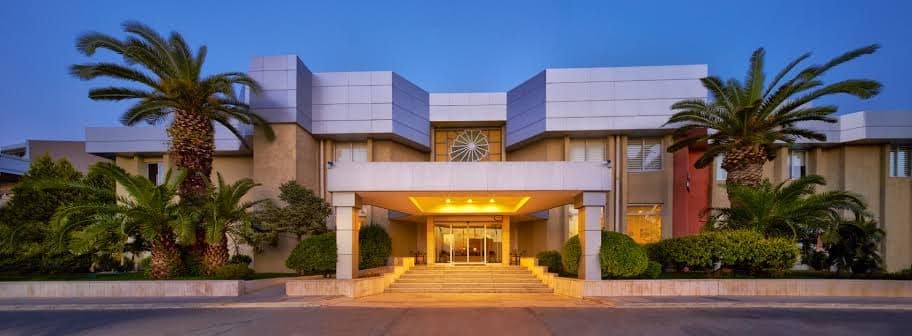
If what you want from Pamukkale is a thermal pool to sink into, the terraces themselves will not give it to you: the travertine pools are shallow, barefoot and mostly for wading and photos, and the deeper Cleopatra’s Pool is a paid day swim, not a place you stay. For an actual thermal-hotel experience, warm mineral water on tap, a spa, somewhere to soak morning and night, you look a few kilometres north, to Karahayıt. This page is about that specific choice: where to stay near Pamukkale when a thermal soak is the reason you came.
What a “thermal hotel” means here
In this corner of Turkey a thermal hotel means a resort plumbed into Karahayıt’s own hot springs, about 5 km north of the white terraces. The water here is the reverse of Pamukkale’s famous slope: it surfaces warm and heavy with iron, running a deep rust-red that tints the ground orange, which is why the springs are known locally as the red water. What matters for a stay is less the geology, which the Karahayıt springs page covers in full, than the fact that the hotels tap this mineral water straight into their own indoor and outdoor pools and spa rooms, held at an even temperature, so you can soak on site morning or night.
The practical upshot is that a Karahayıt thermal hotel is a spa stay first and a Pamukkale base second. You are trading the walk-to-the-terraces convenience of the village for a resort where the water is the amenity.
Who a thermal-hotel stay suits
This kind of stay is not for everyone, and being honest about that is the point. It suits, above all, travellers here for wellness, people who want the mineral soak, the hammam, the massage and the slow evening rather than a dawn dash to the gate. It suits families, because the resorts tend to have large heated pools and more space than a small guesthouse, and children can swim while the adults soak. And it suits winter and shoulder-season visitors most of all: sitting in warm red water with steam rising into cold air is exactly the sort of thing you plan a low-season trip around.
It suits you least if Pamukkale itself is the whole reason for the trip and you mean to be on the terraces at opening. From Karahayıt that means a short drive rather than a stroll, which takes a little more planning, so a terraces-first traveller is usually better off in the village.
The named thermal hotels
Karahayıt has a cluster of these resorts, several of them large and run on an all-inclusive basis. The names that surface most often are Mucize Termal, Pam Thermal and Doğa Thermal, among a good number of others of the same type. Rather than rank them here, the sensible move is to compare current guest ratings and, crucially, exactly what each includes, board level, which pools and spa facilities are open, and whether the thermal pools are indoor, outdoor or both, because these vary widely between properties and change with refurbishment. The cards below surface what is currently bookable; treat any rating as an attributed figure from its source and check it against the live booking page before you commit.
Karahayıt or Pamukkale village?
This is the real decision, and it comes down to what you are optimising for. A Karahayıt thermal hotel gives you the pools, the spa and the space, at the cost of a short transfer to the travertines each time you visit them. A guesthouse in Pamukkale village gives you the terraces on your doorstep, walkable at opening before the crowds, at the cost of the big thermal-pool experience (though some village hotels do have modest thermal pools of their own). Neither is the right answer in the abstract. Weigh the areas side by side on the where to stay hub, and read up on the springs themselves, and how to visit the free public pools, on the Karahayıt red springs page.
Booking, and getting the most from it
A few practical notes. Book ahead for the summer peak and for holiday weekends, when the better-known resorts fill; outside those windows you have more room to negotiate. And set your expectations honestly: these are resort and spa stays fed by real mineral springs, not manicured five-star showpieces, and Karahayıt itself is a low-key thermal town rather than a polished resort strip. Go for the water and the downtime, keep the terraces a short drive away, and it is a genuinely relaxing way to do Pamukkale. When you are ready to plan the visit to the white slope itself, start with the travertine terraces and the tickets page.