
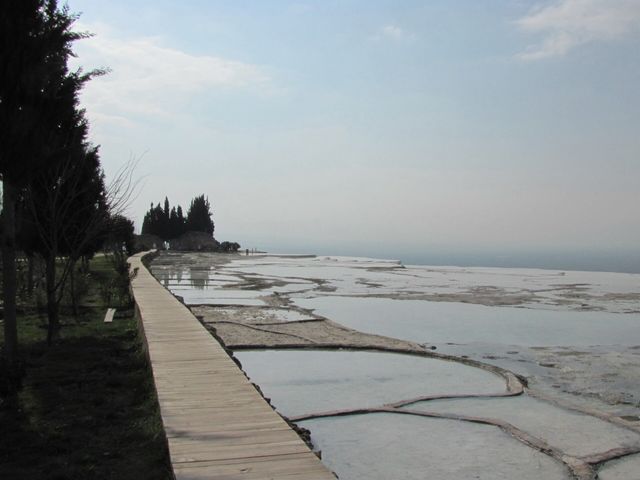
Attraction
The Travertines of Pamukkale
Pamukkale's white travertine terraces: the can-you-swim rules, the barefoot policy, why some pools are dry, the best time of day, and how to visit.
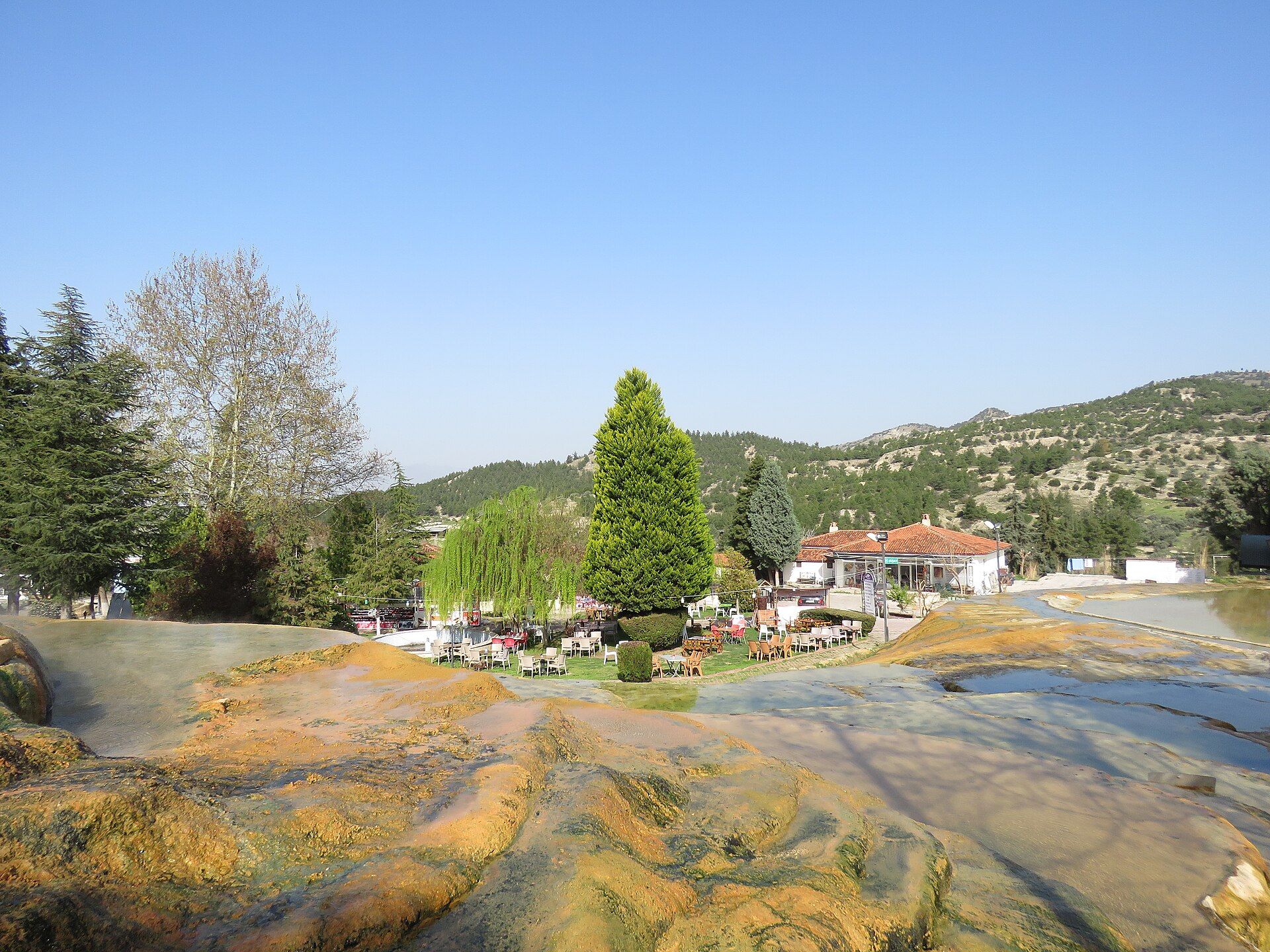
Karahayıt's iron-red mineral springs near Pamukkale: the colourful red terraces, free public access, and the thermal-spa hotels around the town.
Last updated:About 5 km north of Pamukkale, the town of Karahayıt is the white terraces’ colourful cousin. Where Pamukkale’s springs are rich in calcium and bleach the rock a brilliant white, Karahayıt’s are loaded with iron and stain it deep red, rust-orange and ochre instead. Locals call it Kırmızı Su, ‘red water’. It makes a quick, free contrast to the main event, and it is the beating heart of the area’s thermal-spa scene. Google Maps reviewers rate the public springs 4.2 out of 5 (274 reviews).
Pamukkale and Karahayıt draw on the same geothermal system, but their water carries different minerals, and that single difference explains the colours. Pamukkale’s springs are saturated with dissolved calcium carbonate; as the water cools and gives off carbon dioxide, the calcium sets as travertine, the chalk-white rock that builds the famous terraces. Karahayıt’s water instead surfaces heavily charged with iron. The moment it meets the air the iron oxidises, the very reaction that turns metal rusty, laying down warm reds, oranges and ochres over everything the water crosses. Because the spring runs hot, plumes of steam often hang over the coloured channels in cool weather. It is the same underground heat and the same terrace-building chemistry as Pamukkale, just written in a different colour, which is what makes seeing the two together such a vivid before-and-after.
It helps to set your expectations before you arrive. The public springs sit in a small park in the middle of town, where the warm, iron-rich water has crusted the ground in vivid red-and-orange deposits around shallow pools and runnels. Close up it is genuinely striking and very photogenic, but some visitors turn up picturing a whole crimson hillside on the scale of Pamukkale and find something smaller and more low-key. Taken for what it is, a short, colourful stop rather than a half-day sight, it rewards the detour, and half an hour to an hour is plenty to see it and take your photos. The colour runs deepest where the water is actively flowing, so make for the freshly wet channels rather than the dried, dusty crusts, and come in gentler light, early or late, when the reds glow rather than glare.
Karahayıt has drawn visitors for the reputed benefits of its water as much as for the colour. The springs come up hot, around bath temperature, and carry a heavy mineral load well beyond the iron alone; Turkish travellers in particular have long come here to “take the waters” for their supposed effect on skin and tired joints. Those claims are best read as folk reputation rather than medical fact, but they are why a small country town grew into a thermal resort in the first place, and why bathing, not sightseeing, is what Karahayıt is really built around.
One thing to be clear on: the public red-spring pools are for looking and dipping a hand or foot, not for a proper swim. The real soaking happens in the town’s thermal hotels, which pipe the same hot mineral water into their own big pools and hammams. That whole side of Karahayıt, the resorts, what they include, and whether to base yourself up here at all, is laid out in full on the thermal hotels guide, so this page sticks to the springs themselves.
Karahayıt is an easy hop from Pamukkale, only about 5 km up the road. Frequent dolmuş minibuses shuttle between Pamukkale village, Karahayıt and Denizli through the day, and a taxi covers it in a few minutes; if you are driving it is signposted, with parking in town. Because it is so close, it slots around a terrace visit rather than swallowing a day: take in the white slope of Pamukkale and the ruins of Hierapolis in the morning, then run up to Karahayıt for the red springs afterwards.
The springs are free and open, right in the town centre. Unlike Hierapolis and the terraces, which share the single Pamukkale site ticket of about €30, Karahayıt costs nothing to see, and there is no barefoot rule, so ordinary shoes are fine; you only need a swimsuit if you are heading to a hotel pool. The town itself is workaday rather than pretty, built around its spa trade, so the pull is really the springs and the hotel pools rather than the streets, and evenings are quiet, pitched at guests taking the waters. It is a genuine local spot rather than a polished attraction, and on those terms it delivers: a jolt of unexpected colour, a warm soak close by, and an easy foil to Pamukkale’s white. See how it compares with the other trips out from Pamukkale.
Karahayıt is a small thermal town a few kilometres north of Pamukkale, best known for the iron-red mineral springs locals call Kırmızı Su, 'red water'. Hot, iron-laden water rusts the rock into reds and oranges here, the vivid opposite of Pamukkale's white. The public springs cost nothing to visit, and the town doubles as the area's spa-hotel base.
Same heat below ground, different mineral in the water. Pamukkale's is full of calcium that sets into white rock; Karahayıt's is full of iron, and iron turns rusty-red the moment it hits the air. So one spring paints the ground white and its neighbour paints it red, both from the one geothermal source.
Not in the public park, no: those little red pools are too shallow for anything more than a paddle. For an actual soak in the mineral water you head to one of Karahayıt's thermal hotels, which pipe it into full-size pools and hammams. Our thermal hotels guide covers where to bathe and where to stay.
It is a quick trip, not a day out: a few minutes by taxi, or a short ride on the dolmuş that runs between the village, Karahayıt and Denizli. Drivers will find it signposted with parking in town. Being so near, it tucks easily around a morning or afternoon on the terraces.
In short: Karahayıt if you want a thermal pool and spa on the doorstep, the village if you would rather walk to the terraces at opening. It is a genuine trade-off, and we weigh it up properly on the thermal hotels and where to stay guides rather than settle it here.
For a short, free stop, yes, precisely because it is Pamukkale flipped: red in place of white, and warm water you can bathe in at the spa hotels. You can see the public springs in well under an hour, so it asks little of your day in return for a real change of scene.
Attraction
Pamukkale's white travertine terraces: the can-you-swim rules, the barefoot policy, why some pools are dry, the best time of day, and how to visit.
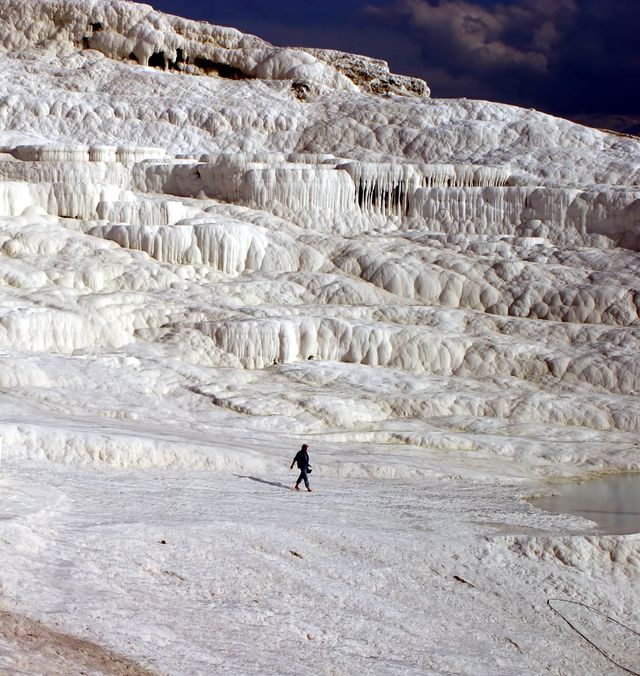
Attraction
Hierapolis, the Greco-Roman spa city above Pamukkale's terraces: what to see and in what order, the theatre, necropolis and Plutonium, the history, and how to visit.
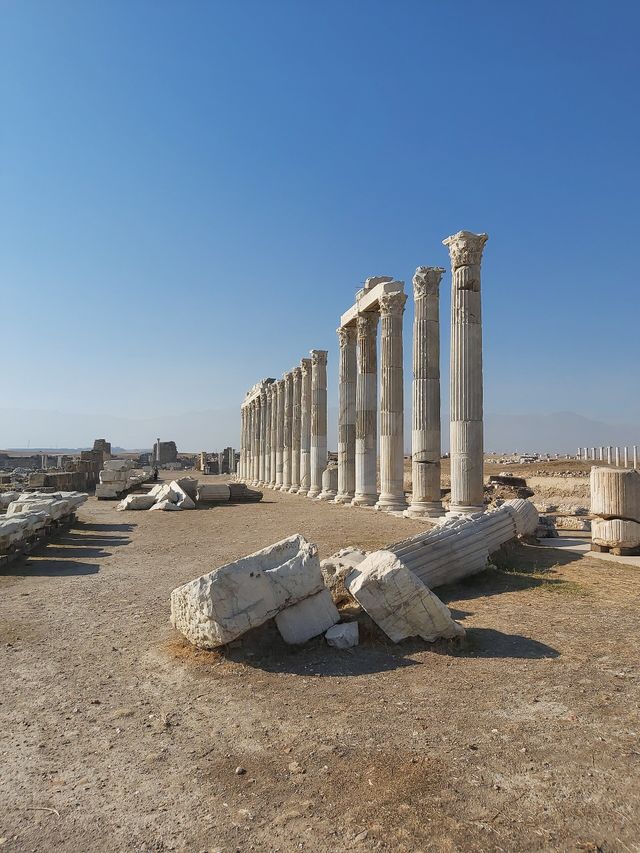
Attraction
Laodicea, a vast ancient city 15 minutes from Pamukkale and one of the Seven Churches of Revelation: what to see, the biblical link, and how to visit.