
Is Pamukkale Drying Up? What's Really Happening (2026 Update)
It isn't drying up. The water is rotated on purpose, some terraces are dry by design, and here's how to find the wet ones.
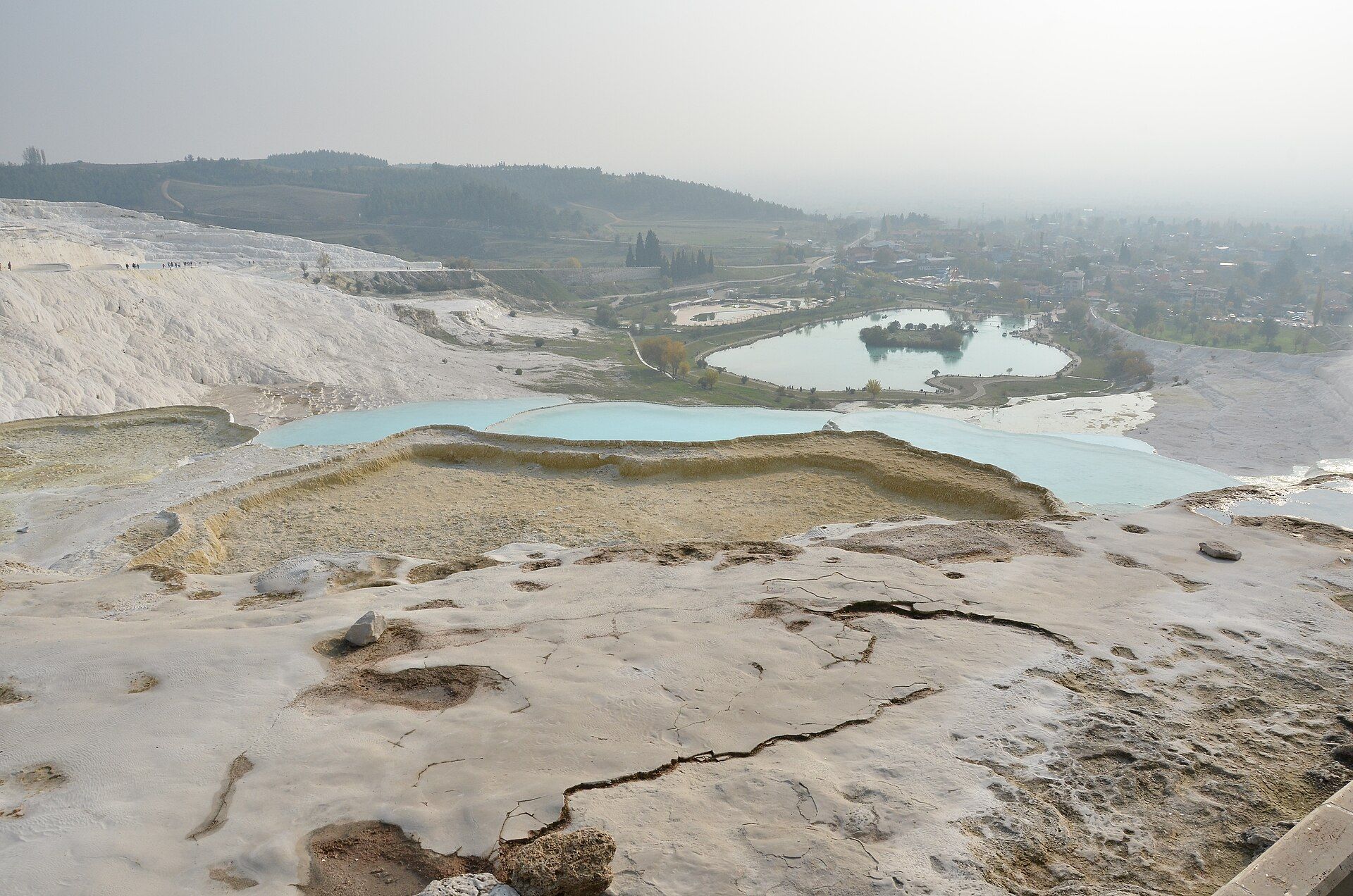
You’re here because you saw two photos. One is white and brilliant: turquoise pools stepped down a glowing slope. The other is a bare grey terrace, cracked and empty, captioned “Pamukkale is drying up.” So which is real? Both, on the same day, a few metres apart. Pamukkale is not drying up. The dry patch in the scary photo is dry on purpose. The thermal water gets moved around the slope on a schedule, so some terraces are flooded and brilliant while others sit empty and rest. That’s the short answer. The longer story, how the place nearly died, how it came back, and what you’ll actually find when you stand there, is the part worth reading before you book.
The short answer: no, but the water moves on purpose
Pamukkale is not drying up. The water you see, or don’t see, on any given terrace is being managed deliberately. Turkish authorities rotate the thermal flow across different sections of the slope, flooding some areas while others go dry, so each part gets its turn to be re-whitened. A dry terrace is a rested terrace, not a dying one. Where the water runs, it’s still laying down fresh calcite and building.
The honest catch, which decides whether you have a good day: because the water rotates, you are not guaranteed that one specific famous pool will be full when you turn up. There will always be active, water-filled terraces somewhere on the slope. But the exact postcard you saved to your phone might be a dry basin when you get there. Know that going in and the rest of this guide is about working with it.
How to know which terraces have water (you mostly can’t, in advance)
This is the one fact every reader actually wants, so here it is plainly. There is no published rotation schedule. The managers move the water to keep the calcite healthy, but they don’t post a timetable, and no website or app tracks which section is wet on a given morning. You cannot reliably plan around a specific pool.
What you can do, once you’re on site, is simple. Follow the water. The active, wadeable pools are the ones gleaming and trickling, and the wet rock is obvious the moment you’re close to it. If you can’t tell from a distance, ask the staff at your gate which section is flooded that day. They know, and they’ll point you. Pick your gate with this in mind too, because some entrances drop you straight into the live, watered area and some leave you a walk from it (more on gates below). That’s the entire practical answer, and the rest of the “drying up” question is really about understanding why the rotation exists at all.
How Pamukkale nearly died: the 1960s to 1980s
The “drying up” worry isn’t invented. It’s a memory of a real low point, and it explains everything about how the site is run today.
Hotels built right on the springs
From the 1960s, hotels went up on top of the formation, directly over the source of the thermal water. They didn’t just sit there. They tapped the springs to fill their own swimming pools, diverting the warm mineral water that should have been spreading down the terraces and feeding the rock. Starve the slope of water and the calcite stops forming. Worse, it starts to discolour. The white that makes Pamukkale Pamukkale depends on a constant film of clean thermal water washing over the stone, and the hotels were drinking that supply.
Shoes, soap, and a road across the rock
At the same time, the terraces got worn down by sheer foot traffic. Tourists walked the soft travertine in shoes, which scratched and dirtied a surface about as soft as chalk. People bathed in the pools with soaps, shampoos and creams, fouling the water. A road ran across part of the formation. Section by section, the rock turned grey, cracked and dry. By the 1980s the damage was plain to see, and Pamukkale was a genuine conservation problem.
So when you read a panicked post about Pamukkale dying, there’s a true event underneath it. It happened forty-odd years ago, and it’s been addressed. The empty terraces you see now are a different thing entirely: rotation, not ruin.
How it was brought back: UNESCO and active management
The turnaround started with a status change, then got real on the ground.
The 1988 World Heritage listing
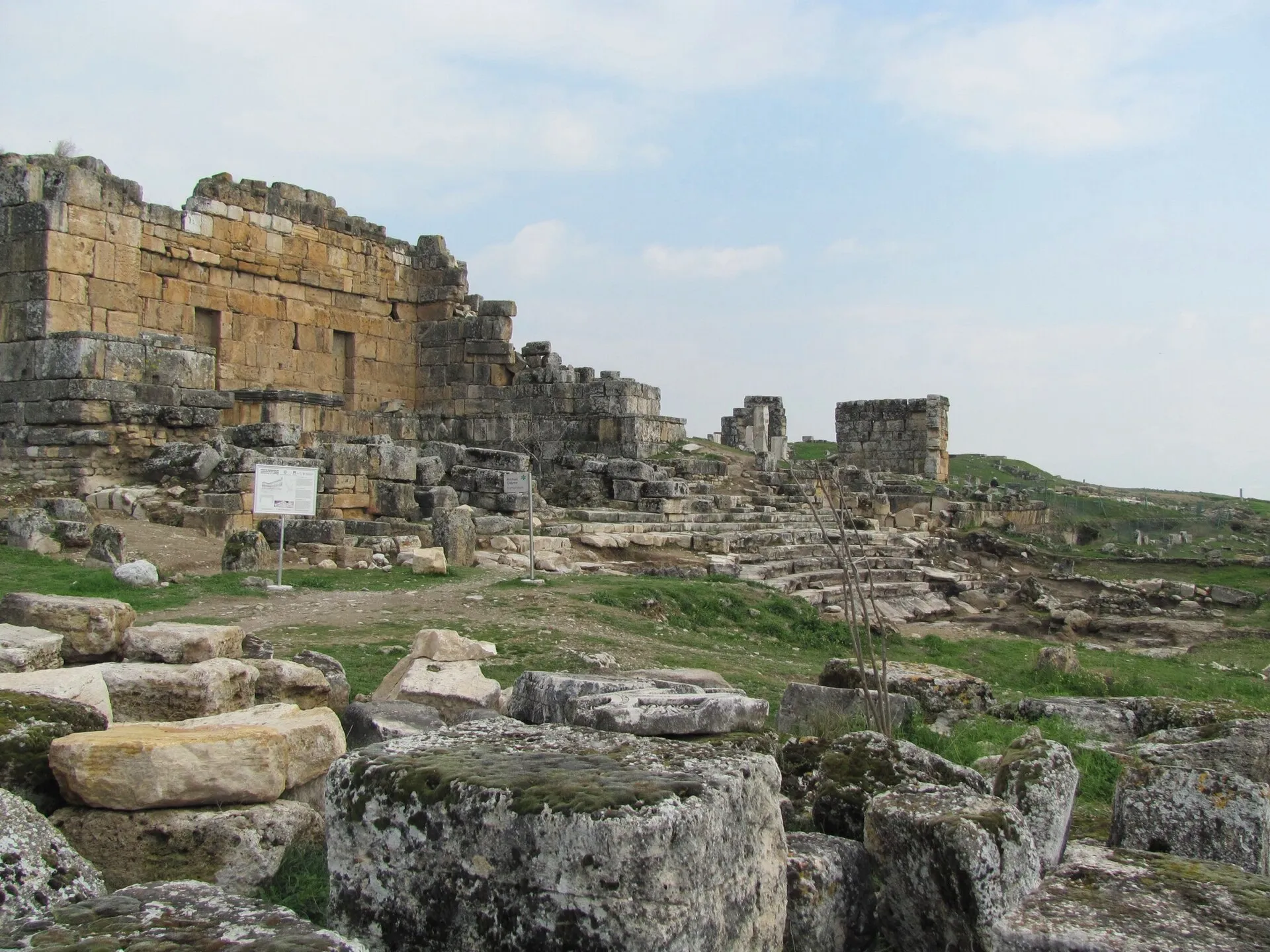
In 1988, Pamukkale and the ancient city of Hierapolis on top of it were inscribed together as a UNESCO World Heritage Site. That listing mattered because it put the site under international scrutiny and gave the authorities both the obligation and the cover to make unpopular decisions, like tearing down hotels that were making money.
What actually changed on the ground
Over the years that followed, the fixes were blunt and effective. The hotels built on top of the springs were demolished. The road across the terraces was removed. Shoes were banned, so today everyone walks the white rock barefoot, carrying their shoes in their hands. And the authorities took control of the water itself, channelling it and rotating it across the slope on a managed basis instead of letting it be siphoned off or run wherever.
That last point answers the drying-up question directly. The water isn’t gone. It’s being steered.
Why rotation keeps the rock alive
To see why moving the water protects the whole formation, you need one fact about what the white rock is. It’s travertine, calcium carbonate, the same mineral as chalk and limestone. Hot springs underground dissolve calcium out of the bedrock and carry it up to the surface. When that water spreads out, cools and meets the air, the calcium drops out of solution and hardens onto the rock, building up rim by rim, basin by basin, over thousands of years. The same suspended minerals are why the water looks milky turquoise.
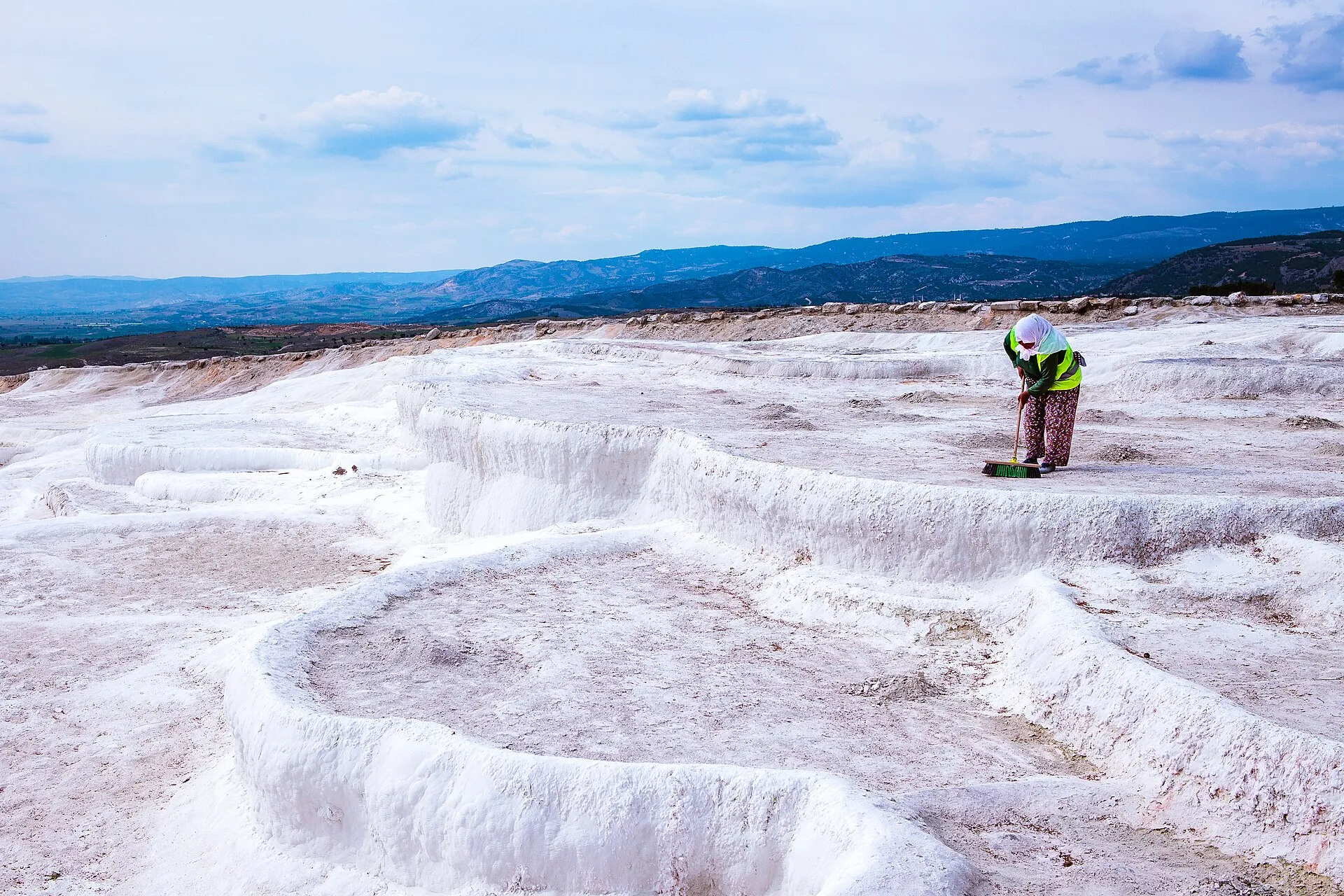
Now the key bit, and it’s also the answer to “is Pamukkale still growing.” Keep clean thermal water flowing over a section and it re-whitens and keeps building. Starve a section and it greys and degrades, which is exactly what the hotels caused. There isn’t enough flow to keep every terrace on a 2.7-kilometre, 160-metre-tall slope brimming at once. So instead of running everything thin and risking patchy decline, the managers concentrate the water, flood part of the slope properly, let it do its mineral work, then move on and flood the next part. The dry terraces are resting between floods. They get the water back in turn, and when they do, the rock starts building again. Rotation, not constant flow everywhere, is what keeps the formation growing where it counts. There’s a fuller breakdown of the rock and the rules on the travertine terraces page.
What you’ll actually see on the day you visit
This is where most disappointment comes from, and where a little expectation-setting changes everything.
Some terraces full, some bare, and that’s normal
Set your expectations now. A stretch of the famous pools may well be empty when you’re there. You might walk past a basin you recognise from a thousand Instagram posts and find it dry. That is not a sign you’ve come on a bad day or that the site is failing. There will always be active, water-filled terraces somewhere on the slope, and the white rock is striking even where it’s dry, all curves and ledges and rippled stone. You came to see a strange white mountain, and a strange white mountain is what’s there whether a given pool is full or not.
The barefoot rule is conservation, not a quirk
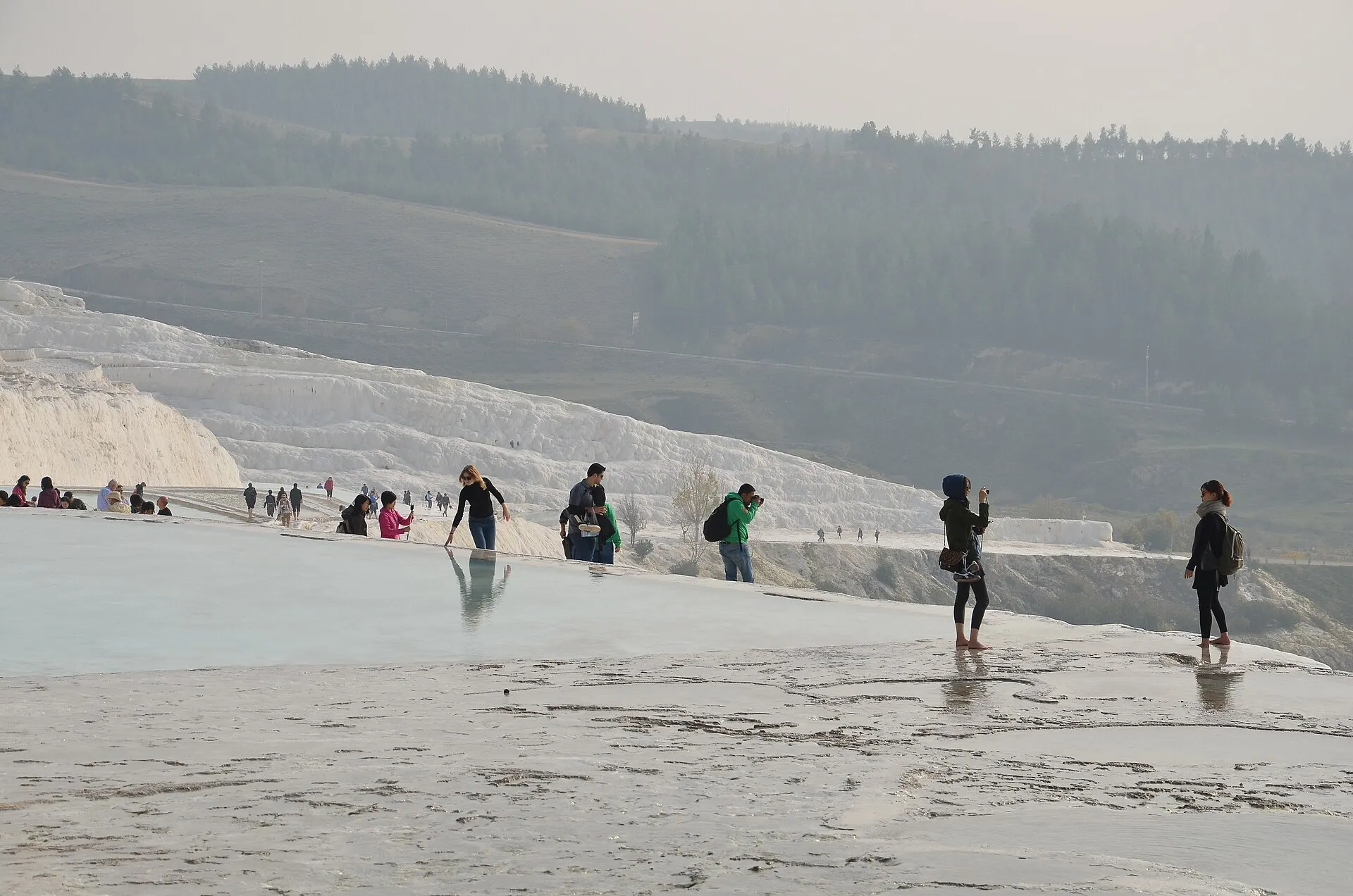
Shoes come off before you step on the travertine, and you carry them. It feels like a novelty, but it’s part of why the site recovered. Footwear scratches and stains the soft rock, which is what wore the terraces grey in the bad old days, so the ban directly protects the formation. There’s a side benefit: bare feet grip wet stone better than soles do. And you’ll want the grip, because the rock is genuinely slippery where the water runs over it. Walk slowly, plant each foot, and bring a small dry bag so you’re not juggling shoes, socks and a phone while trying not to fall. We go deeper on footwear, what to pack and the slippery-rock problem in the Pamukkale barefoot rules and what to wear guide.
Plan your visit so you catch the wet terraces, not the dry ones
You can’t control which terraces are flooded. You can control your gate, your timing and your month, and those three decisions do most of the work of getting you the brimming-white version instead of the midday-grey one. All three are covered in full on the tickets and gates and best time to visit pages, so here’s the short version aimed at the water.
Pick the Town Gate if you want to walk up the white slope barefoot and land right among the active wading pools (20 to 30 minutes up). The South Gate up top means the least walking but the most coaches from mid-morning. The North Gate drops you into Hierapolis first, good for the ruins before the crowds.
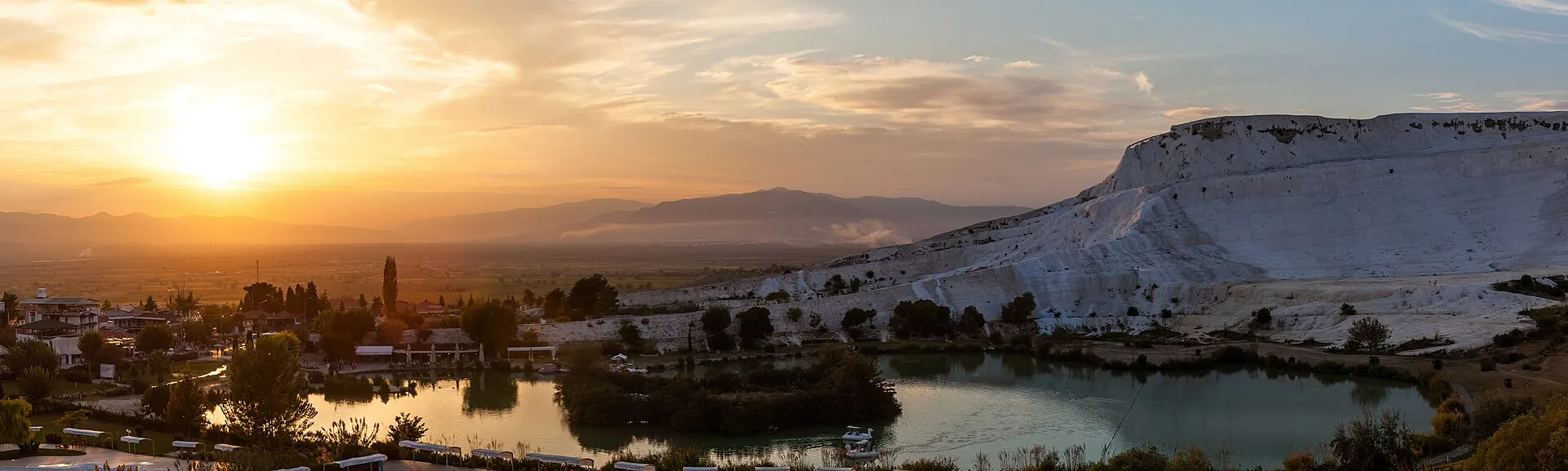
Go at opening or late afternoon. In summer the gates open at 06:30 (08:00 in winter); be there at opening for soft light, cool air and near-empty terraces before the coaches roll in. Late afternoon into sunset is the other good window. Midday is the worst of both: peak crowds and flat overhead glare. April to June and September to October are the comfortable months for barefoot walking. The thermal pools stay warm all year (around 35°C), so even a quiet winter visit can hand you whole terraces to yourself, see Pamukkale in winter.
Can you still swim? (the question right behind “is it drying up”)
The other half of the worry is usually “and can I even get in the water?” Yes, but know what you’re getting. The terrace pools are for wading, not swimming. Most are shallow, ankle to shin deep, and many are roped off so the calcite can recover and keep forming. It’s warm and bright and lovely to stand in, but it isn’t a swim. And because the water is rotated, which open pools are full changes day to day, so you take what the slope is offering that morning.
For an actual swim, you want Cleopatra’s Antique Pool, a short walk behind the ruins. It’s deeper, kept at body temperature (around 36°C) all year, and you float over sunken Roman marble columns that toppled into the spring during an earthquake, probably in the 7th century, and were left where they fell. It costs a separate fee on top of your site ticket (around €13, paid in lira at the pool, and recently quoted as low as about €6), and it reopened in 2026 after a renovation that added changing rooms and a cafe. Note what this tells you about the drying-up question: Cleopatra’s runs on the same thermal system, it’s deep, warm and flowing, and people swim in it every day. The water is there.
So, is it worth going if some terraces are dry?
Yes, for most people, if you arrive expecting some dry sections and you time your visit. That’s the honest verdict, no alarmism and no whitewash.
The people who leave Pamukkale disappointed almost always did the same thing: they came at midday in peak season expecting the empty, brimming, advertisement version, and they got crowds and a few grey terraces instead. Knowing in advance that the site is managed, that some basins are dry by design, and that the water moves, is the difference between feeling cheated and having a great day.
There’s one real tradeoff, stated plainly. “Managed and recovering” is not the same as “pristine and untouched.” You’re trading a guaranteed-perfect postcard for a living, actively conserved site kept alive by people making daily decisions about where the water goes. We think that’s a fair trade. The wonder is real, and it’s still here precisely because someone decided to manage it instead of letting the hotels drain it dry. For the full, eyes-open reality check before you commit, that’s the is Pamukkale worth visiting guide, which also covers the natural-or-man-made and “what is the white stuff” questions in detail.
One thing sweetens the deal. The single €30 site ticket covers the terraces plus the ruins of Hierapolis on the plateau above, a Greco-Roman spa city with a theatre and a vast necropolis, and the archaeological museum. You came for one wonder and get two. For proof that the full, brilliant version is real and not some old archived photo, our 48 hours in Pamukkale photo diary shows the terraces at dawn and sunset.
Water-management facts, conservation history and prices last verified June 2026. Turkey adjusts museum fees fairly often and Cleopatra’s Pool is paid in lira, so the euro figures here shift with the exchange rate. Confirm the live price at muze.gov.tr or the gate before you travel.
Frequently asked questions
Is Pamukkale drying up?
No. The thermal water is rotated across different sections of the slope on a schedule, so some terraces are flooded and white while others sit dry and rest. A dry terrace is a rested one, not a dying one. Decades ago hotels over-drew the springs and the rock did suffer, but authorities took control of the water after the 1988 UNESCO listing, and now manage its distribution. That's conservation, not collapse.
How often does Pamukkale's water rotate?
There's no published schedule. The authorities move the thermal flow between sections to keep the calcite forming, but they don't post a timetable, so you can't know in advance which terraces will be wet on your day. The practical answer: on the day, follow the rock that's gleaming and trickling, or ask the staff at the gate, who know which section is flooded.
Which terraces have water right now?
It changes day to day and there's no way to check before you arrive. There will always be active, water-filled terraces somewhere on the slope, usually along the marked barefoot path. The wet rock is obvious once you're there, it's the part that's glistening and has water running over it. If you can't tell, the staff will point you to the flooded section.
Why are some Pamukkale terraces empty or dry?
Because the water is rotated on purpose. There isn't enough flow to keep the whole 2.7-kilometre slope brimming at once, so the managers flood one section properly, let it re-whiten, then move the water to the next. The dry basins are resting and will be flooded again in their turn. Dry sections are the price of keeping the wet ones brilliant white.
Is Pamukkale still growing?
Where clean thermal water runs over the rock, yes, it keeps depositing fresh calcium carbonate and building up rim by rim, the same process that formed it over thousands of years. The formation is actively maintained: hotels demolished, shoes banned, water put under management after the 1988 UNESCO listing. It's a working, conserved formation, not a ruin.
Will the dry Pamukkale terraces come back?
Yes, that's the whole point of the rotation. A dry section isn't damaged, it's resting between floods. When the managers steer the water back over it, clean thermal flow re-whitens the rock and the calcite resumes building. The grey, starved decline people remember from the 1970s and 80s came from the springs being drained by hotels, which is a different thing and was fixed.
Can you still swim at Pamukkale if it's 'drying up'?
Yes. You can wade in the open terrace pools, which are shallow and barefoot only, though which ones are full changes day to day. For a proper, deeper swim there's Cleopatra's Antique Pool, which runs on the same thermal system, stays warm year-round, and has people in it every day. That alone tells you the water is there.
Where to eat nearby
-
Tıkır Grill House
The area's heavyweight: by far the most-reviewed restaurant around Pamukkale and still highly rated, which is rare since popularity usually drags scores down. A Turkish grill at heart, so come for kebabs and grilled meat. That rating-on-huge-volume pattern suggests it earns its popularity despite sitting near the site, rather than trading on location.
-
Hiera Restaurant
The village's special-occasion table, and reservation-only, so it's a planned dinner rather than a walk-in. A more refined sit-down meal with prices to match. Book ahead in peak season.
-
Osmanlı Restaurant
One of the most-reviewed places in the village, which points to a dependable, unpretentious all-rounder. Leans to Turkish meat dishes and kebabs, easy walk-in, mid-range. A sensible default for a good Turkish meal without deciding too hard.
Related reading
Blog
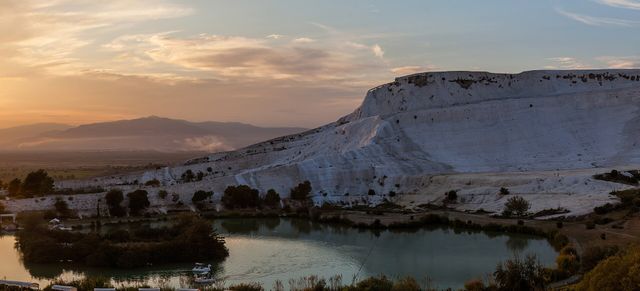
48 Hours in Pamukkale: A Two-Day Itinerary & Photo Diary
Most people rush Pamukkale in three hours. Give it two days and it hands you the terraces twice, at the only two times of day worth photographing them.
Blog
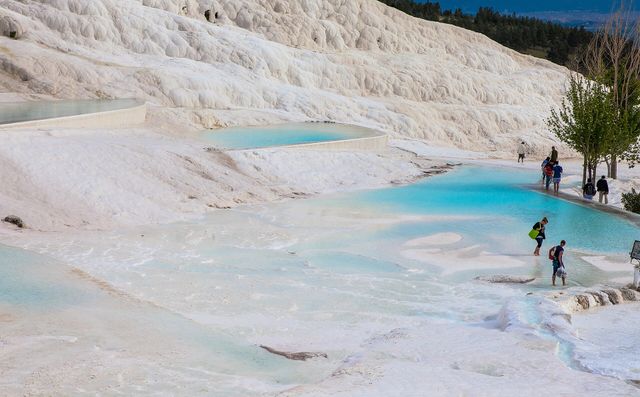
Pamukkale Barefoot Rules & What to Wear (2026)
Shoes off, swimsuit on, dry bag packed. The simple kit that turns the barefoot walk into the best part of the day.
Blog
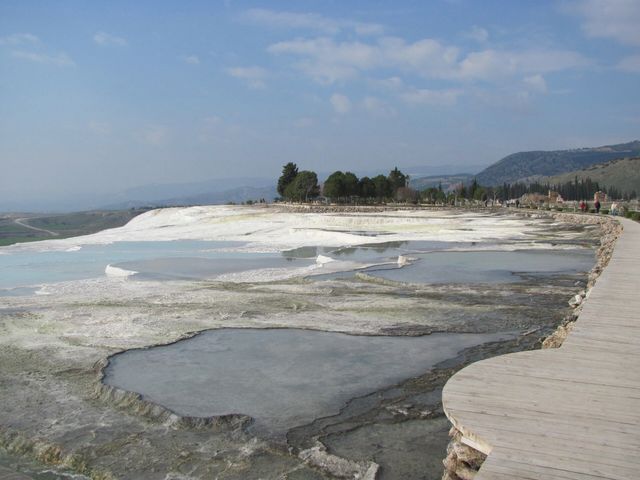
Pamukkale in Winter: Worth It? (What to Expect)
Cold air, warm water, empty terraces, and cold feet. Here's who winter works for and who should wait.