
Pamukkale Barefoot Rules & What to Wear (2026)
Shoes off, swimsuit on, dry bag packed. The simple kit that turns the barefoot walk into the best part of the day.
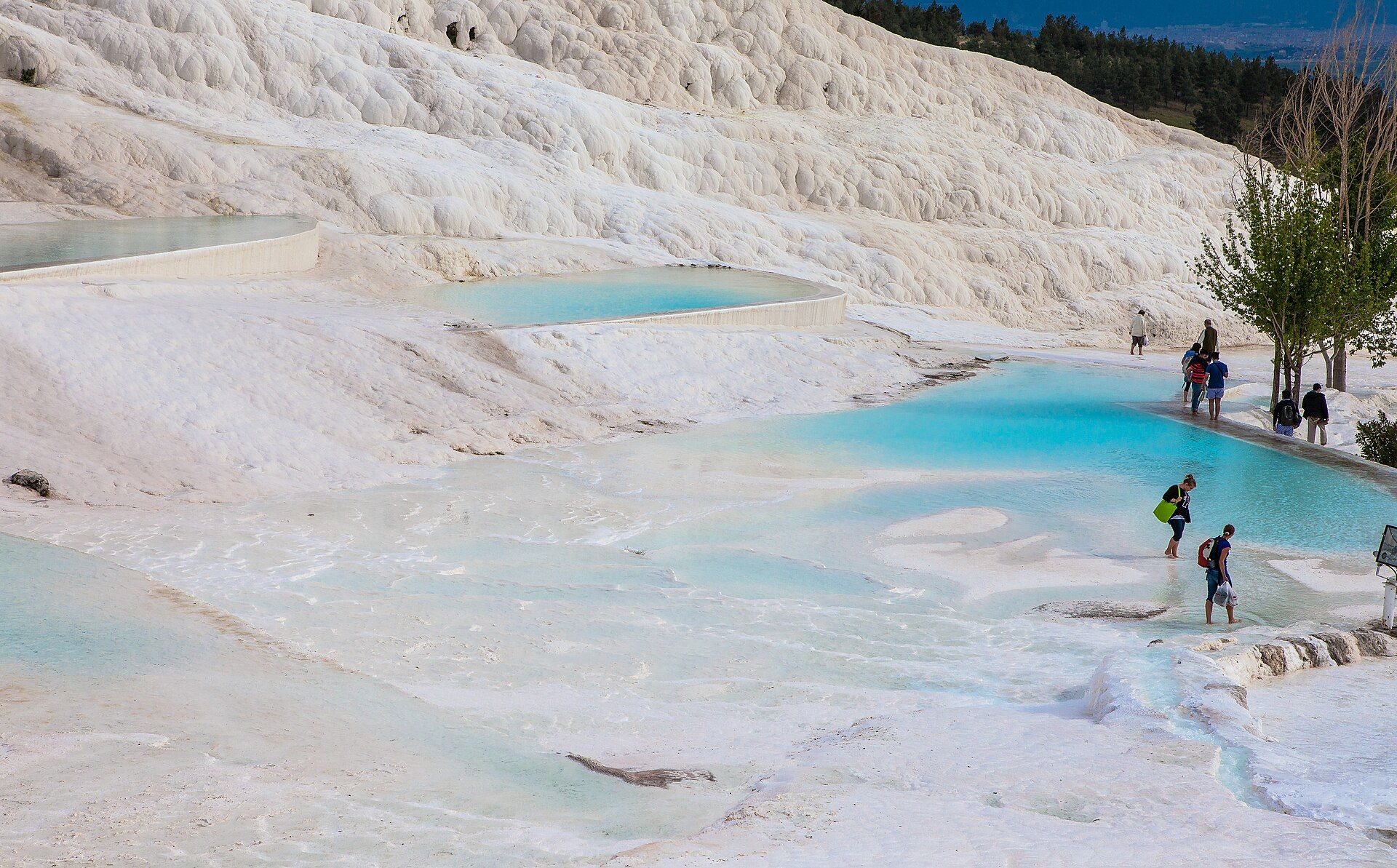
You walk Pamukkale’s white terraces barefoot, and you carry your own shoes the whole way. Get those two things right and the white slope is the best part of the day. Get caught out and you’re balancing on wet rock with a phone in one hand and your trainers in the other, wondering where to put them down. This page covers exactly that: what the surface does to your bare feet, where your shoes go while you walk, and what to wear for the terraces, the ruins of Hierapolis and the swim. The rules first, then the kit, in the order you’ll actually need them.
Yes, you really do go barefoot, and it’s not optional
The rule is one line: shoes come off before you step onto the travertine, you carry them, and there are no exceptions. Staff hold the line at the edge of the white rock, and you’ll see everyone ahead of you slipping off their sandals at the same spot.
It applies only to the white terraces. You wear normal shoes everywhere else on the site, in the ruins of Hierapolis up top and on the path over to Cleopatra’s Pool. So you’re not barefoot for the whole visit, just for the stretch on the travertine itself, which is part of a one-to-two-hour terrace walk.
Kids go barefoot too. The rule is about the surface, not about who you are, so there’s no separate arrangement for children or for anyone in sturdy shoes. Everyone’s on bare feet once they’re on the rock.
Nobody searches your bag, and you could in theory try to keep your shoes on. Don’t. The staff stop you at the shoes-off line, and the whole point of the rule collapses the moment people start cheating it. Bare feet also grip wet travertine better than rubber soles do, so the rule that sounds like a hassle is the thing keeping you upright. You feel it from the first step.
Why the no-shoes rule exists
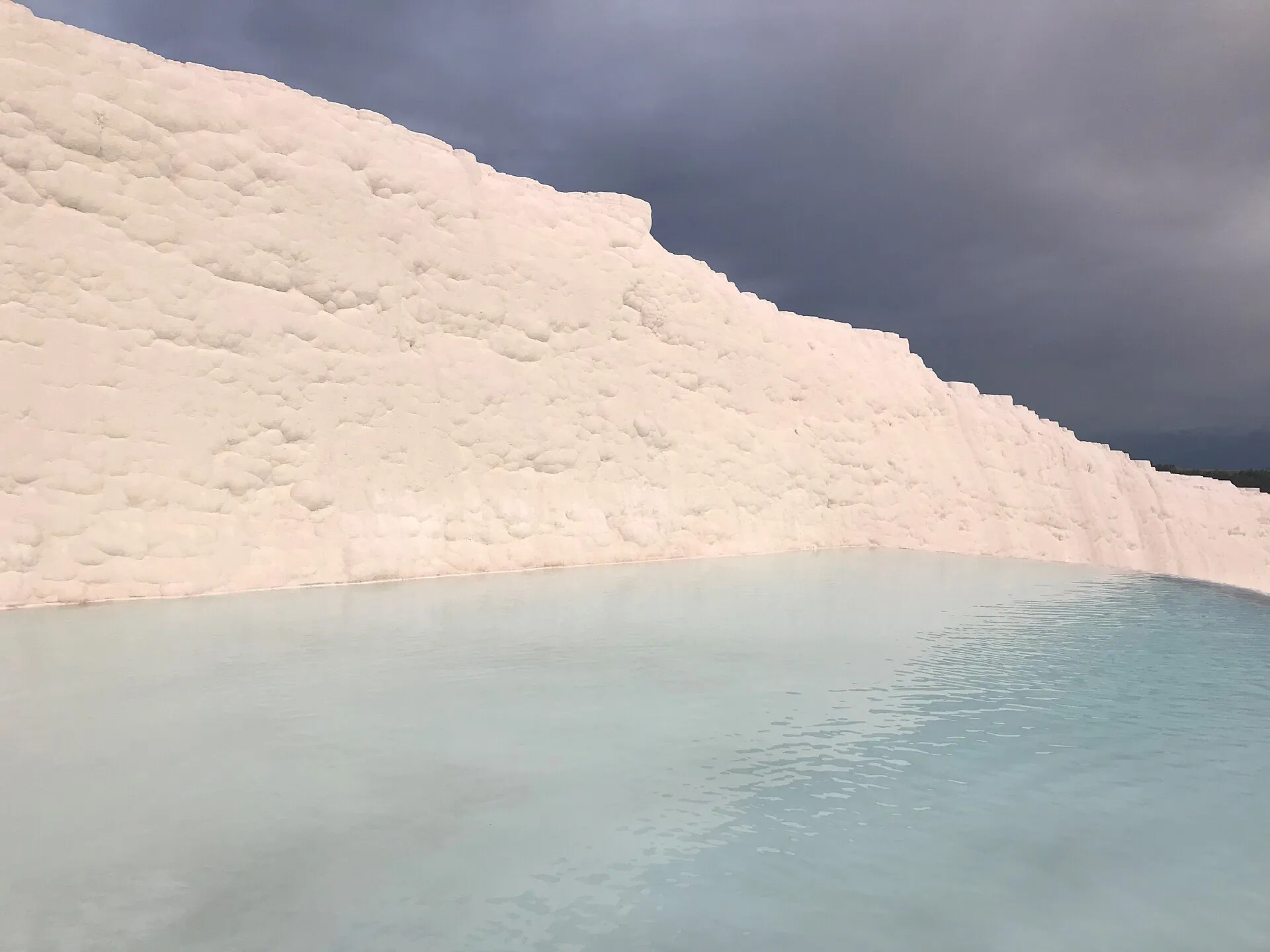
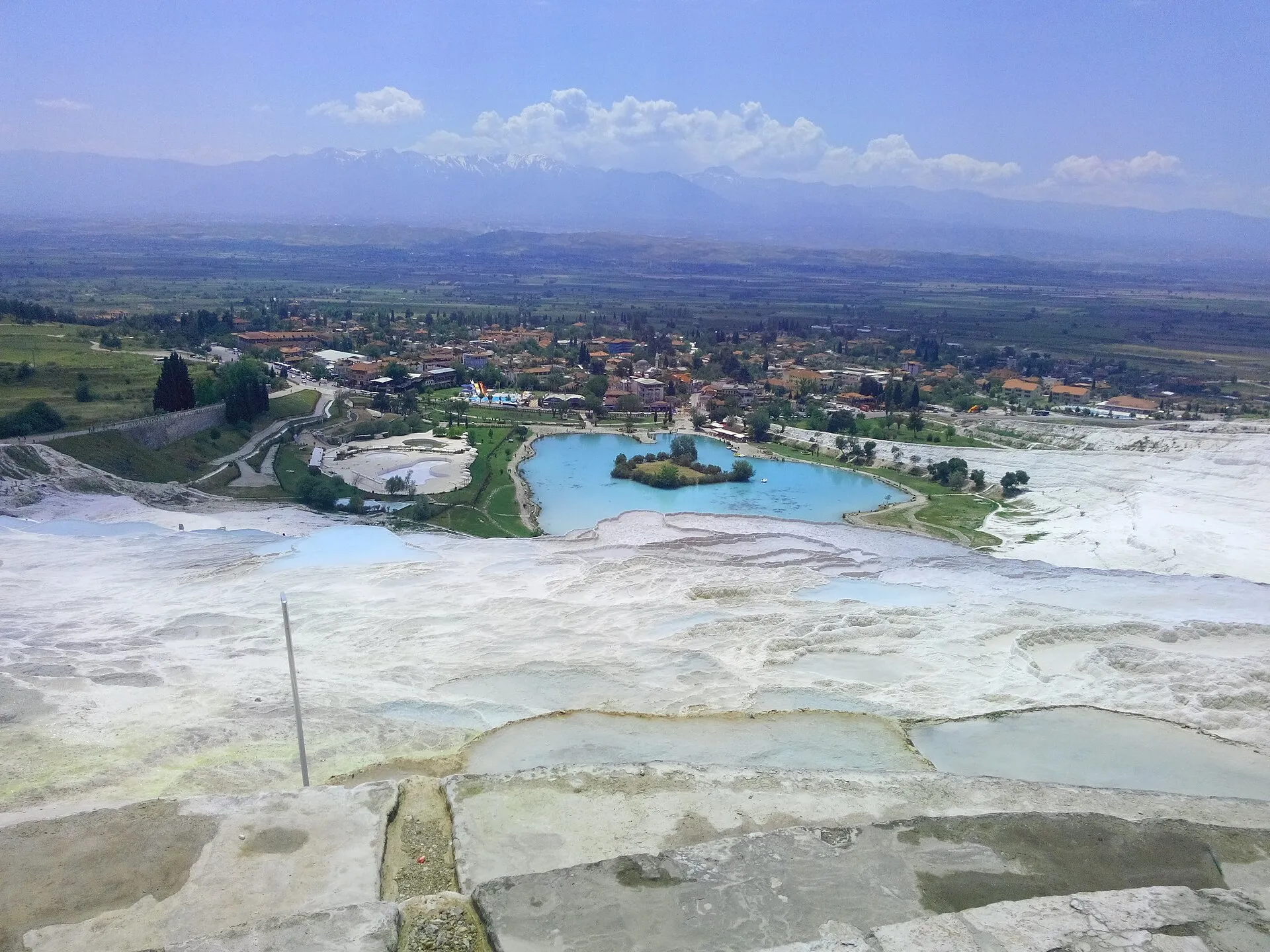
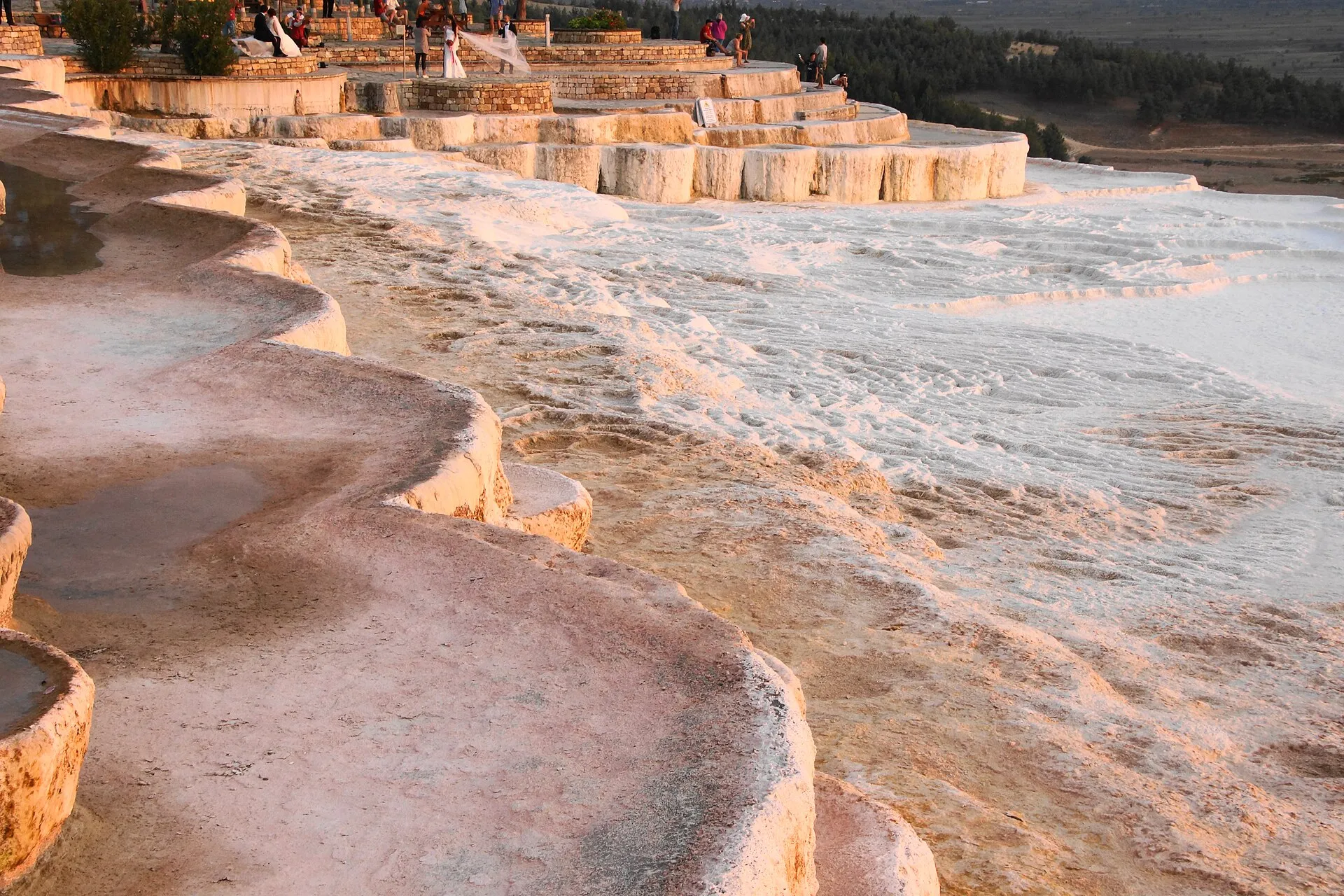
The white rock is travertine: calcium carbonate, the same soft mineral as chalk and limestone. Underground hot springs dissolve calcium from the bedrock, carry it to the surface, and as that water cools and meets the air the calcium hardens, building the terraces up rim by rim over thousands of years. The whole formation is 2.7 km long and about 160 metres tall. It looks solid, but as rock goes it’s soft.
Soles scratch it and grind dirt into it. One pair of shoes wouldn’t matter. Millions of feet a year do, and the white slowly goes grey where footwear has scuffed it. Banning shoes is the cheapest way to keep the formation white, so that’s the rule.
It’s the same conservation logic behind the pools you’ll find roped off and the stretches of terrace that sit dry. The site moves the thermal water around the slope in managed turns, flooding and re-whitening one area while the rest rests, which is also why some terraces look dry when you arrive. Protecting the calcite runs through everything here.
What the surface actually feels like underfoot
It’s wet, it’s slippery where water runs over it, and in places it’s a little rough or ridged. The basins are smooth. The rims and ledges between them are textured, sometimes slightly sharp-feeling under a sensitive sole, but it’s manageable, not painful. You feel the rock; you don’t suffer it.
The water is warm. It’s the same thermal spring water that builds the terraces, sitting around 35°C year-round, so stepping into an active pool is pleasant rather than the cold shock people brace for. Where the rock is dry it’s cool to neutral underfoot; where the water flows it’s warm.
How you walk matters more than what’s on your feet, which is nothing. Go slowly. Plant each foot before you shift your weight. Take the downhill seriously, because the slick spots and the gradient combine there and that’s where people go down. It’s a careful amble, not a stride. Treat it that way and the travertine is easy. There’s more on the wading, the timing and the views on the travertines page.
One question people are too polite to ask: is it clean, with that many bare feet on shared wet rock? It’s fine. The thermal water runs constantly and the whole thing is open to the sun and air, which is about as hygienic as a shared wet surface gets. Bring the small towel you’d pack anyway and dry your feet before you re-shoe, and you’ve covered it.
Where your shoes go, and how to get your feet dry again
This is the bit guides skip. You carry your shoes the entire time you’re on the terraces. There’s no shoe check-in at the edge of the white rock and nowhere to leave them, so whatever you take off, you take with you.
Which is why a small dry bag or daypack beats holding them in your hand. Stash the shoes, socks, phone and camera, and your hands stay free for balance, which on wet rock is the whole game. Trying to walk a slippery slope while juggling trainers and a phone is exactly how people end up sitting down hard. Keep the bag small. There’s no left-luggage at the gates and no lockers out on the rock, and you’re carrying it barefoot up a slope, so a daypack you can sling on works, a wheelie case or a big holdall does not.
Pack flip-flops or sandals as your swap shoe, and slip them on the second you’re back off the travertine, because your feet come off wet. There’s no foot-rinse tap waiting at the bottom, so the routine is simple: step off the rock, dry your feet with that small towel, then sandals on. Wet feet straight back into socks and trainers is miserable. Wet feet into flip-flops is fine.
How this changes by gate
Which gate you enter decides how long you’re actually barefoot, and how much the carrying matters. There are three.
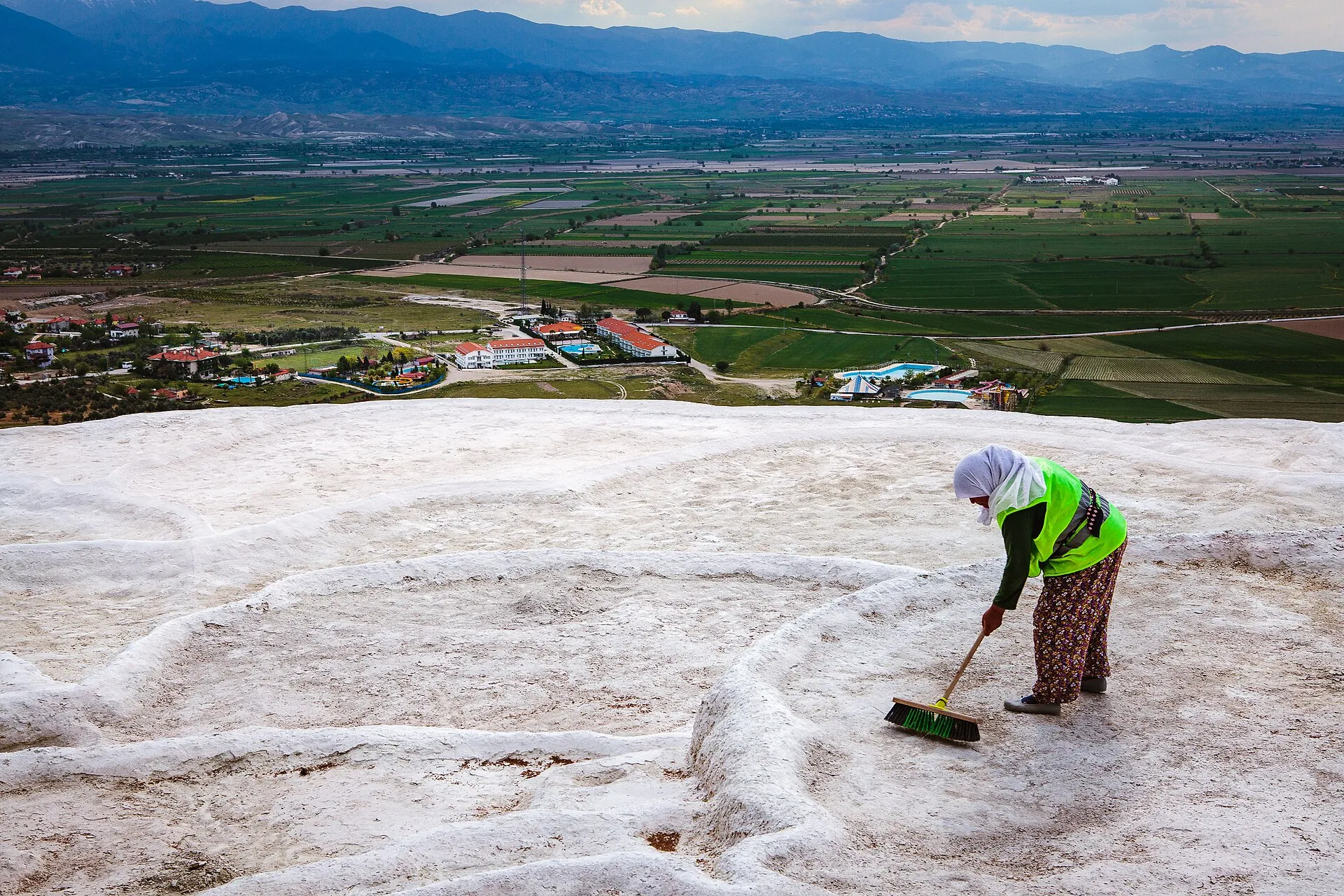
Town Gate drops you at the bottom of the village, and from here you walk up the white slope itself, barefoot, for 20 to 30 minutes at a gentle pace. It’s the prettiest way to do the terraces and the longest stretch on bare feet, so it’s the one where carrying your shoes properly counts most. If you want the full barefoot walk, this is the gate to pick, and a dry bag earns its place here.
South Gate sits up top near the ruins, with the biggest car park, and brings you in close to the terraces over flat ground. It’s the least walking and the shortest time on bare feet, which is why the tour buses use it and why it’s busiest from mid-morning.
North Gate is the far entrance and puts you into Hierapolis first. You walk 45 to 60 minutes through the ruins in shoes (or take the paid mini-vehicle shuttle) before you reach the terraces from above, so you’re shod for most of the visit and only barefoot at the end.
Pick your gate before you arrive; people who turn up at the wrong end lose an hour backtracking. The full breakdown of the three gates, the fee and the hours is on the tickets page.
What it costs to get in
Worth stating plainly, because every barefoot day starts at a gate: one ticket covers the whole site. The adult Hierapolis-Pamukkale ticket is €30 (around $33) as of 2026, and it includes the travertine terraces, the ruins of Hierapolis and the archaeological museum. There’s no separate “terraces only” rate. The one thing not in that ticket is a swim in Cleopatra’s Pool, which is a paid extra you’ll see costed below. Young children enter free, with the age cutoff set at the gate.
What to wear: terraces, Hierapolis, and the pool
For the terraces
Light clothes you can move in. Wear shorts or roll your hems, because the active pools are ankle-to-shin deep and you don’t want soaked trouser legs the rest of the day. If you plan to wade, put your swimsuit on underneath before you leave, since there’s no convenient changing spot out on the rock.
For Hierapolis
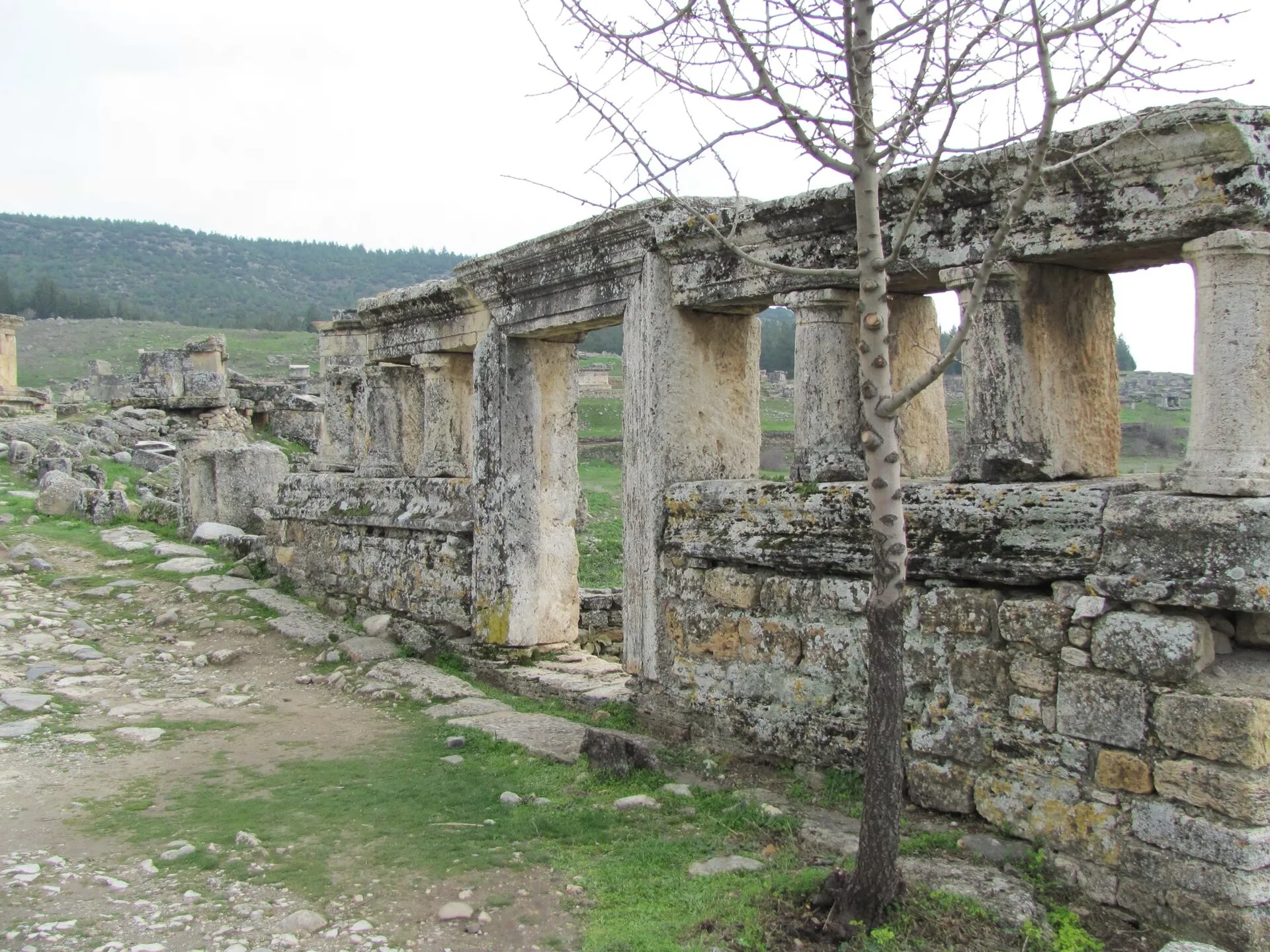
The ruins are the opposite kit. Hierapolis is hot, spread out and short on shade, so this is where your proper shoes go back on for a two-to-three-hour walk on normal ground, with a hat and water. You go from barefoot-and-wet on the terraces to fully shod across the ancient city of Hierapolis, which is exactly why having dry flip-flops first and your real shoes in the bag pays off.
For Cleopatra’s Pool
If you’re swimming, wear your swimsuit under your clothes to skip the changing room, and bring a towel and flip-flops for the walk and the poolside. There are lockers and changing rooms on site. The swim in Cleopatra’s Antique Pool is a separate fee, around €13, and the ticket covers roughly two hours, of which you’ll spend the better part of an hour in the warm 36°C water among the sunken Roman columns. It’s priced in lira and paid at the pool, so the euro figure drifts with the exchange rate and has recently been quoted as low as about €6. The pool reopened in 2026 after a renovation that added rest areas and a cafe.
Swimwear
Wear your swimsuit under everything all day and the whole question is solved. Just set your expectations: the terrace pools are a shallow wade, ankle to shin, warm and good to stand in but not deep enough to swim. The real swim is Cleopatra’s. Don’t arrive expecting to do laps on the travertine.
The water-shoes (and socks) debate, settled
This is the question everyone asks, so here’s the answer: water shoes come off too. Aqua socks, jelly sandals, the lot. Footwear is footwear, and it all stops at the same shoes-off line as your trainers, because the ban is about the rock, not the type of sole. That includes plain socks. People try them as a loophole, but socks count as footwear, they come off, and wet socks on travertine are a slip hazard anyway. Nothing goes on the rock but skin.
People reach for water shoes out of two fears, slipping and sensitive feet, and both are misplaced here. Your bare feet grip the wet surface better than any sole, so water shoes would make you less stable, not more. And the rock isn’t sharp, it’s ridged. You feel the texture, you don’t cut yourself on it.
There’s nowhere they’re required, but they’re not useless to own. If you’ve already got a pair, they’re fine in your bag for the walk between sites or the wet changing-room floor at Cleopatra’s. Just don’t buy a pair specially for Pamukkale, and don’t try to argue your way onto the terraces in them. Flip-flops cover everything off the rock.
Sun, heat and cold: the white rock is the real hazard
The sky isn’t your problem here. The white travertine is. It bounces the sun straight back up at you, so you burn from below as well as above, and people badly underestimate how fast it happens out on the bright rock. Hat, sunglasses, high-SPF sunscreen, and reapply, especially on the undersides of your arms and your chin where reflected light hits.
In summer it’s hot, often 34°C and up in July and August, with no shade on the terraces or in Hierapolis, so carry water and don’t ration it. The best time of day fixes both the heat and the footing at once: come at opening (06:30 in summer, 08:00 in winter) or in late afternoon, when the rock is cooler underfoot, the light is softer, and the coach crowds have gone. Midday is the worst of it, harsh flat glare and the busiest path. The best time to walk the terraces page lays out the windows in full.
Winter flips the kit and the surface both. Highs sit around 10 to 12°C and lows drop near freezing, so the wet rock is genuinely cold on bare feet, and they numb faster than you’d expect. Plan a shorter barefoot stretch, don’t dawdle on the dry rock between pools, and treat the warm pools as the payoff for the chill. Bring warm layers and a waterproof. If winter’s your season, there’s a fuller account of Pamukkale in winter, including the barefoot reality.
The complete barefoot-day packing list
- A small dry bag or daypack, to carry shoes, phone and camera with your hands free for balance. Keep it small enough to wear up the slope; there’s no left-luggage at the gates.
- Flip-flops or sandals for the moment you step off the terraces, when your feet are wet
- A small quick-dry towel, doubling as the thing you dry your feet with before re-shoeing
- A swimsuit, worn under your clothes
- Summer: hat, sunglasses, strong sunscreen, water. Winter: warm layers and a waterproof
- A cloth for your camera or phone lens, because the mineral mist coats everything. The 48-hour photo diary shows what the light does across a day if you’re shooting it
One line on what to leave behind: skip the water shoes, and don’t pack more footwear than you can comfortably carry on wet rock, because there’s nowhere to lock up a spare pair of boots.
A few comfort and logistics tips
Your time on bare feet is short. The whole terrace visit runs one to two hours, and the barefoot stretch is only part of that, so even if your feet are sensitive, you’re not on the rock for long.
If some terraces look dry and grey, that’s the rotation at work, not a closure. The warm water is shifted from section to section over time, so even when the basin in front of you is resting, you’ll find a warm, walkable pool flowing elsewhere on the slope. Ask a staff member which stretch is flooded, or just follow the shine of running water.
On accessibility, the honest read: wet, slippery and hilly is hard going for anyone with limited mobility or using a wheelchair, and the barefoot terrace path isn’t designed for wheeled access. The flatter upper area by the South Gate is the workaround. From there you can get close to the top of the terraces and look down the slope on firm, level ground without committing to the barefoot descent, and parts of Hierapolis up top are manageable too.
Plan the order of your day to avoid putting wet shoes back on. Terraces barefoot first, dry your feet and get your shoes on, then Hierapolis, then the swim at the end. The itineraries page shows how to fit the terraces, the ruins and a swim into one day without backtracking.
Frequently asked questions
Do you have to take your shoes off at Pamukkale? Yes, on the travertine terraces it’s mandatory. You walk barefoot and carry your shoes, because footwear scratches and stains the soft white rock and the site bans it to protect the formation. You can wear shoes everywhere else, including the ruins of Hierapolis and the path to Cleopatra’s Pool. It’s only the white terraces that are shoes-off.
Can you wear water shoes or socks on the terraces? No. Water shoes, aqua socks, jelly sandals and plain socks all come off at the shoes-off line, same as trainers, because the ban covers all footwear. Bare feet also grip the wet rock better than any sole, so they wouldn’t help you anyway.
Is the travertine slippery? Will I slip? It’s slippery where water runs over it, yes. Most people are fine by walking slowly and planting each foot, especially downhill. Bare feet grip better than shoes would, which is part of why the rule exists.
Is it hygienic to walk barefoot where so many people do? Yes. The thermal water flows constantly and the whole surface is open to sun and air. Dry your feet with your towel before you put shoes back on and you’ve done all that’s needed.
What should I wear at Pamukkale? Light clothes with a swimsuit underneath if you want to get in the water, plus a small dry bag for your shoes and phone. Add a hat, sunglasses and strong sunscreen in summer, since the white rock reflects hard, and warm layers and a waterproof in winter.
Is it cold on bare feet in winter? Yes. The wet rock is cold when winter highs are only 10 to 12°C and lows are near freezing, and your feet numb fairly quickly, so plan a shorter barefoot walk. The pools stay warm at around 35°C all year, which is the upside.
How much does it cost, and is Cleopatra’s Pool separate? The single site ticket is €30 (about $33) as of 2026, covering the terraces, Hierapolis and the museum. Cleopatra’s Antique Pool is the one paid extra, around €13 in lira at the pool, for roughly two hours in the water.
The barefoot walk is the part people remember: the warm rock, the milky water, the strange ground under their feet. The only thing standing between you and an easy version of it is a dry bag and a pair of flip-flops. For the fees, hours and gates in full, see the tickets page, and to slot the terraces, the ruins and a swim into one day, the itineraries page.
Prices, hours and temperatures last verified June 2026. Turkey adjusts museum fees fairly often and Cleopatra’s Pool is paid in lira, so the euro figures here shift with the exchange rate. Confirm the live price at muze.gov.tr or the gate before you travel.
Frequently asked questions
Do you have to take your shoes off at Pamukkale?
Yes, on the travertine terraces it's mandatory. You walk barefoot and carry your shoes, because footwear scratches and stains the soft white rock and the site bans it to protect the formation. You can wear shoes everywhere else, including the ruins of Hierapolis and the path to Cleopatra's Pool. It's only the white terraces that are shoes-off.
Can you wear water shoes or socks on the terraces?
No. Water shoes, aqua socks, jelly sandals and plain socks all come off at the shoes-off line, same as trainers, because the ban covers all footwear. Bare feet also grip the wet rock better than any sole, so they wouldn't help you anyway.
Is the travertine slippery? Will I slip?
It's slippery where water runs over it, yes. Most people are fine by walking slowly and planting each foot, especially downhill. Bare feet grip better than shoes would, which is part of why the rule exists.
Is it hygienic to walk barefoot where so many people do?
Yes. The thermal water flows constantly and the whole surface is open to sun and air. Dry your feet with your towel before you put shoes back on and you've done all that's needed.
What should I wear at Pamukkale?
Light clothes with a swimsuit underneath if you want to get in the water, plus a small dry bag for your shoes and phone. Add a hat, sunglasses and strong sunscreen in summer, since the white rock reflects hard, and warm layers and a waterproof in winter.
Is it cold on bare feet in winter?
Yes. The wet rock is cold when winter highs are only 10 to 12°C and lows are near freezing, and your feet numb fairly quickly, so plan a shorter barefoot walk. The pools stay warm at around 35°C all year, which is the upside.
How much does it cost, and is Cleopatra's Pool separate?
The single site ticket is €30 (about $33) as of 2026, covering the terraces, Hierapolis and the museum. Cleopatra's Antique Pool is the one paid extra, around €13 in lira at the pool, for roughly two hours in the water.
Where to eat nearby
-
Tıkır Grill House
The area's heavyweight: by far the most-reviewed restaurant around Pamukkale and still highly rated, which is rare since popularity usually drags scores down. A Turkish grill at heart, so come for kebabs and grilled meat. That rating-on-huge-volume pattern suggests it earns its popularity despite sitting near the site, rather than trading on location.
-
Hiera Restaurant
The village's special-occasion table, and reservation-only, so it's a planned dinner rather than a walk-in. A more refined sit-down meal with prices to match. Book ahead in peak season.
-
Osmanlı Restaurant
One of the most-reviewed places in the village, which points to a dependable, unpretentious all-rounder. Leans to Turkish meat dishes and kebabs, easy walk-in, mid-range. A sensible default for a good Turkish meal without deciding too hard.
Related reading
Blog
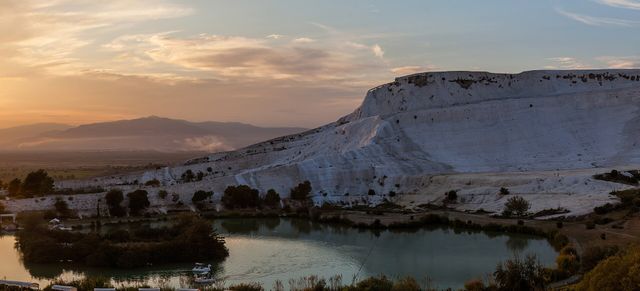
48 Hours in Pamukkale: A Two-Day Itinerary & Photo Diary
Most people rush Pamukkale in three hours. Give it two days and it hands you the terraces twice, at the only two times of day worth photographing them.
Blog
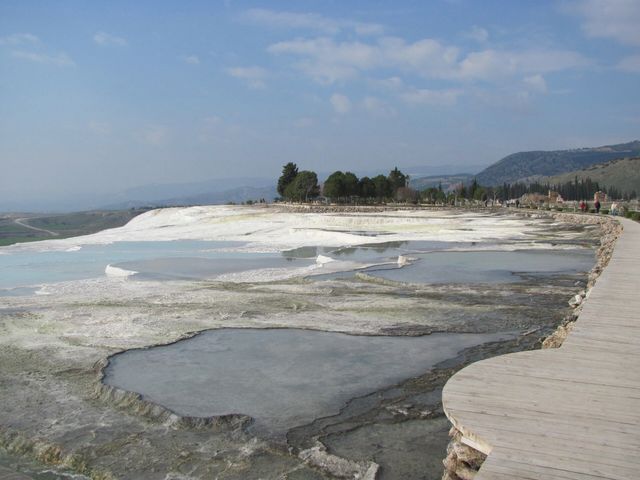
Pamukkale in Winter: Worth It? (What to Expect)
Cold air, warm water, empty terraces, and cold feet. Here's who winter works for and who should wait.
Blog
Pamukkale vs Cappadocia: Which Should You Choose? (2026)
Two very different trips. Here's how to pick, and how to do both.