
Pamukkale vs Cappadocia: Which Should You Choose? (2026)
Two very different trips. Here's how to pick, and how to do both.
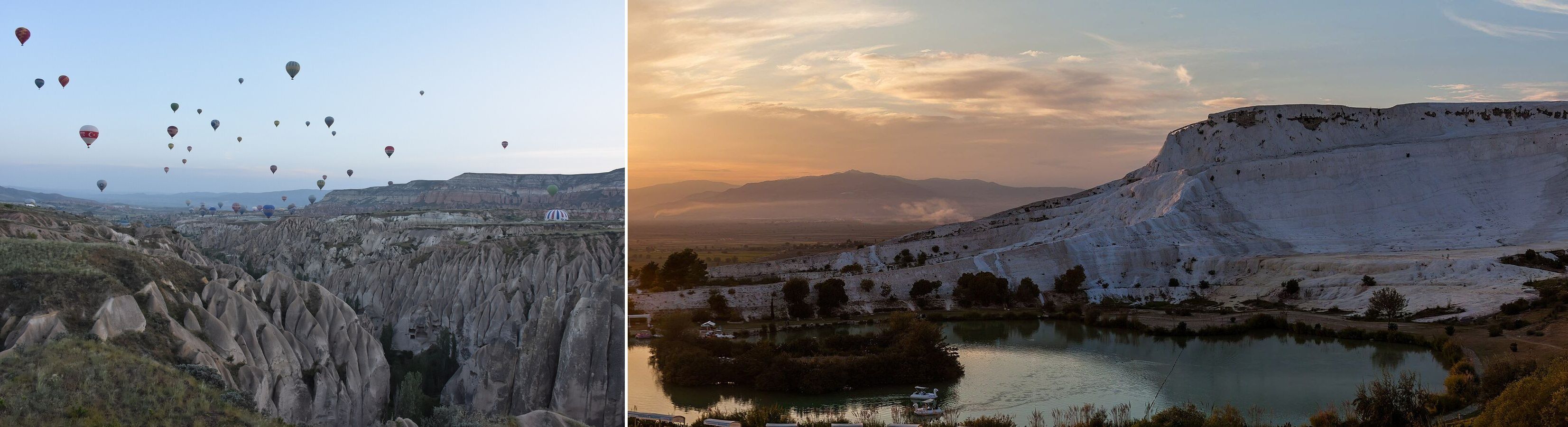
If you’re trying to pick between Pamukkale and Cappadocia, you’re half-asking the wrong question. They aren’t the same kind of trip, so they aren’t really alternatives. One is a half-day to full-day site, a natural wonder with a Roman city sitting on top of it. The other is a whole region you move through for days. The choice that actually matters isn’t which is “better.” It’s how many days you’ve got, and what you want to do with them.
The quick answer
Choose Cappadocia for a few days of dramatic valleys, cave hotels, hiking, underground cities and a sky full of balloons at dawn. It’s a place you explore, not a single stop.
Choose Pamukkale for a striking one-day sight: white travertine terraces plus a major Roman ruin, Hierapolis, that drops neatly into a wider Turkey itinerary.
If your trip can stretch, do both. They’re a classic pairing, connected by an overnight bus or a multi-day tour, and seeing both is the answer most travellers land on once they look at a map.
One line to steer by: if you’ve only got a spare day, that’s a Pamukkale-shaped gap, not a Cappadocia one.
Pamukkale vs Cappadocia at a glance
| Pamukkale | Cappadocia | |
|---|---|---|
| What it is | One UNESCO site: white travertine terraces plus the Hierapolis ruins | A whole region of fairy-chimney valleys, cave towns and underground cities |
| Where | Denizli province, southwest Turkey; 18 km from Denizli | Central Anatolia (Göreme, Nevşehir) |
| Time it needs | Half a day to a full day | 2 to 3 days, more if you hike |
| Signature experience | Barefoot on warm turquoise terrace pools; a swim in Cleopatra’s Pool | Sunrise balloons, cave hotels, valley hikes |
| Cost basics | One €30 (about $33) site ticket | No single ticket; you pay per museum, site and activity, plus the cave hotel |
| Ballooning | Smaller, quieter, roughly €100 to €180 | The bigger spectacle, and pricier |
| Best time | Spring and autumn; summer mornings work if you go early | Spring and autumn; winter flights cancel often |
| Best for | A wonder plus ruins in a short stop | Multi-day landscape immersion |
What each is actually like
Cappadocia: a region you explore
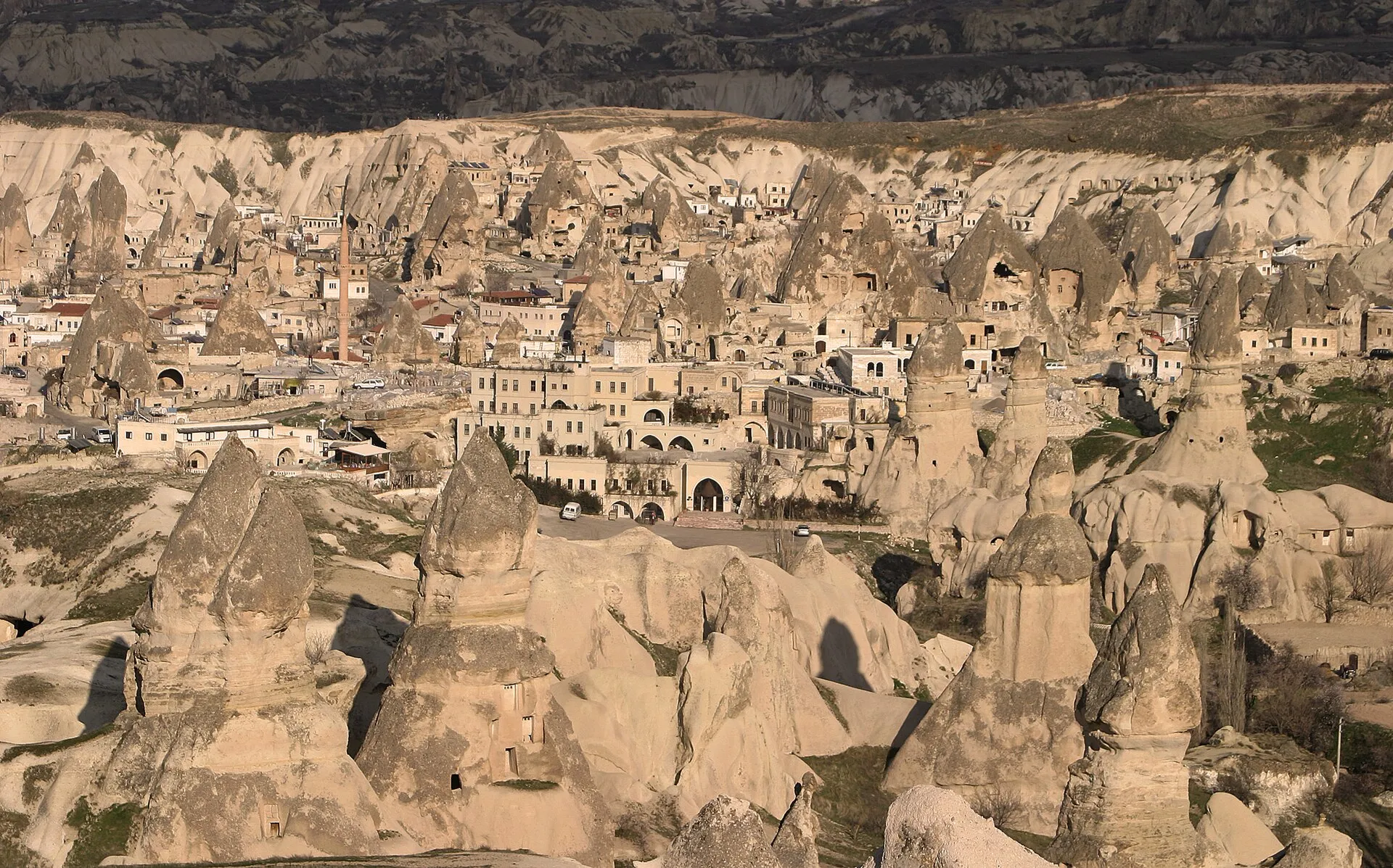
Cappadocia is central Anatolia at its strangest. Fairy-chimney rock spires, cave churches cut into the cliffs, underground cities that drop several levels below the surface, and valleys you can hike for days. You sleep in a cave hotel, and at first light you watch dozens of balloons rise over the rock. Two or three days fill up fast, more if you like walking.
The honest catch: it’s the region that’s the draw, not one spot. You’re moving around the whole time, hotel to valley to underground city to viewpoint. That’s the appeal if you want immersion. It’s also why a single day here doesn’t work. You’d spend it in transit and see a fraction.
Pamukkale: one remarkable place, with a ruin attached
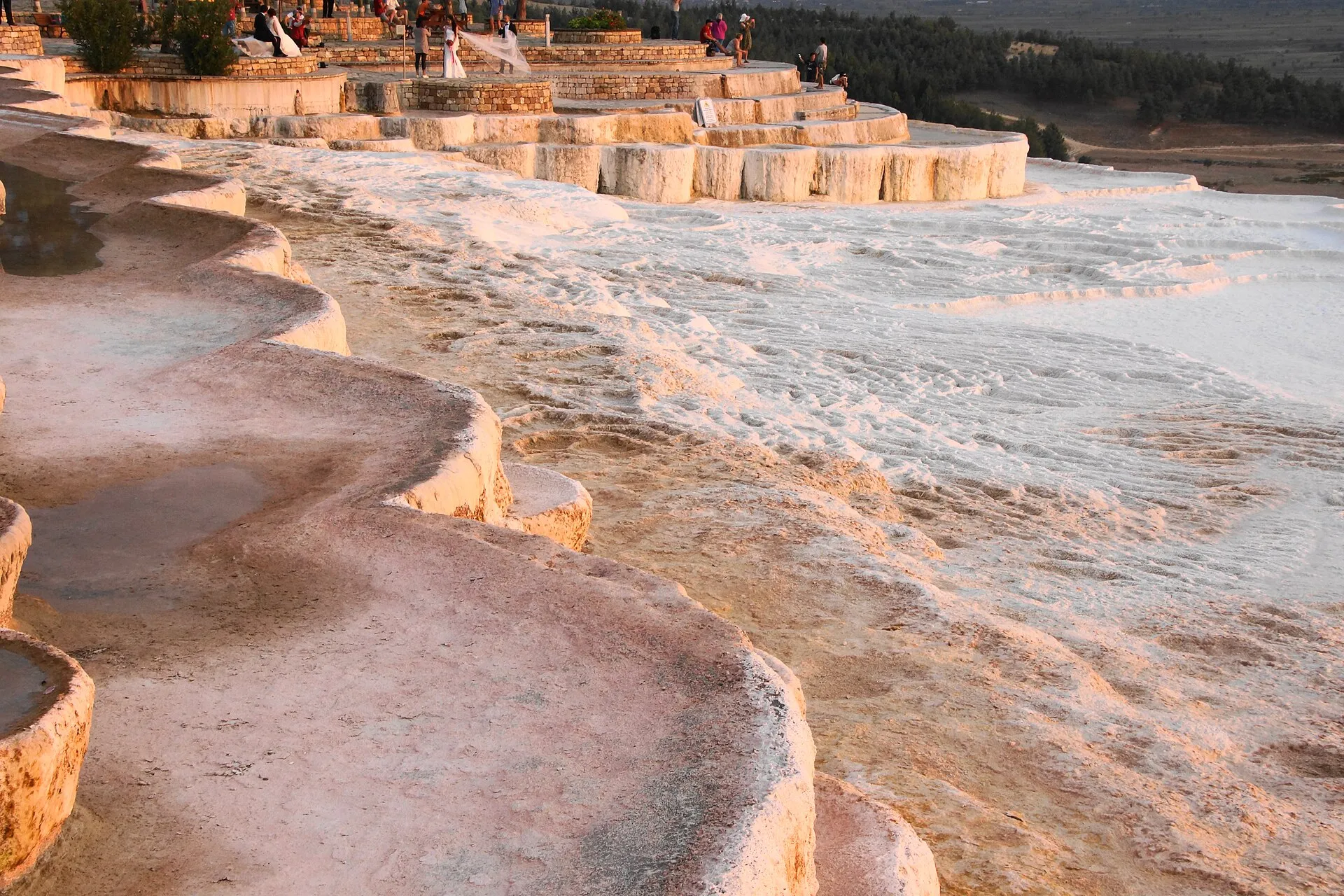
Pamukkale is a single site in the southwest: a white mineral mountainside of thermal terraces, with the ancient spa city of Hierapolis spread across the top. The white travertine terraces are the headline. There’s nowhere else quite like a whole chalk-white slope of mineral shelves with warm, milky-turquoise water pooling on the ledges. You walk it barefoot, shoes in hand, because footwear damages the rock and the surface is genuinely slippery.
Then there’s the part most day-trippers underrate. Right on top of the terraces sit the ruins of Hierapolis: a well-preserved theatre carved into the hillside, one of the largest necropolises in Anatolia, the Ploutonion (a cave the Romans called a gate to the underworld, because the carbon dioxide seeping out of it killed animals), and Cleopatra’s Antique Pool, where you swim over toppled Roman columns. The terraces and the city share one ticket and one UNESCO listing, joint, since 1988. You came for one wonder and got two.
You can see the essence in a morning. You can see everything in a day.
How long does each one need?
This is the factor that usually decides it, more than taste does.
Cappadocia wants two to three days to do it justice, and more if hiking is a priority. Pamukkale wants half a day for the terraces alone, a full day for the terraces plus Hierapolis plus a Cleopatra’s Pool swim, and occasionally a second day if you add a dawn balloon flight or a nearby site like Laodicea or Salda Lake. Our one-day and two-day itineraries lay out exactly how a day here splits.
So the steer is simple. A spare day points to Pamukkale. A spare three days, especially if you’re drawn to landscapes and hiking, points to Cappadocia. The time you have settles this more cleanly than any “which is more beautiful” debate.
And since people do ask which is more beautiful, here’s the honest call rather than a dodge. Cappadocia is the bigger, more cinematic landscape, the one that fills a camera roll. Pamukkale is the stranger single sight, a white mineral mountainside you’ve genuinely seen nowhere else. If you want sweep and scale, Cappadocia wins. If you want one unrepeatable image, Pamukkale does. They’re beautiful in completely different registers, which is exactly why “do both” keeps coming up.
Cost: how the two really compare
They price differently in kind, not just in amount, so it’s worth being precise.
Pamukkale is cheap to enter and see. One ticket, currently €30 (about $33), covers the travertine terraces, Hierapolis and the archaeological museum. There’s no separate “terraces only” rate and no cheaper evening price. The only paid extra inside the gates is a swim in Cleopatra’s Antique Pool, charged in lira, around €13 (recently quoted as low as about €6). Most people find that fair for two major attractions in one stop. The full breakdown, plus the three gates and where to actually buy, is on the tickets page.
Cappadocia has no single ticket, and that’s the whole point about its cost. You pay per museum, per underground city, per activity, then add a cave hotel for two or three nights and, if you want it, a balloon. The stay is the spend, not any one ticket. The balloon is the big-ticket item and runs noticeably more than Pamukkale’s. No single museum or underground city is expensive on its own; the total climbs because it’s a multi-night, activity-led region rather than one gate you walk through. Prices there shift with the season and the exchange rate, so confirm the live figures for the specific museums, underground cities and hotels you’re considering before you book.
The short version: with Pamukkale you’re buying a ticket, with Cappadocia you’re buying days. That single difference explains most of the gap.
When to go (and why it differs)
Timing hits the two regions differently, and it can tip a close call.
For Pamukkale, late spring and autumn are the sweet spot: April through June and September through October give warm, dry days and comfortable barefoot walking. July and August are hot, often 34°C and up, with the white rock throwing the sun straight back at you. Summer still works if you’re at the gate for the 06:30 opening and out before the coaches and the midday glare. Winter is cold (highs around 10 to 12°C) and quiet, but the thermal water stays near 35°C all year, so a winter soak in Cleopatra’s Pool is genuinely good. More detail by month is on the best time to visit page.
For Cappadocia, the season matters most for one reason: the balloons. Flights only go in stable air, and winter weather grounds them far more often, so if a dawn flight is the reason you’re going, a winter trip is a gamble. Spring and autumn are the safe bets for both regions, which is also when the combined trip works best.
So if your dates land in deep winter and a balloon is non-negotiable, that quietly nudges the decision toward Pamukkale, where the terraces and the warm pool don’t depend on the weather.
Ballooning at both: where to do it
Both float balloons at sunrise, when the air is stable, and people ask all the time where to spend the money.
Cappadocia’s is the bigger spectacle: dozens of balloons at once over a stranger landscape, and priced to match. Pamukkale’s balloon is more intimate and cheaper, roughly €100 to €180 per person for about 45 to 60 minutes in the air, with the unique view of the white terraces and the layout of Hierapolis from above. Neither is wrong.
The verdict depends on your trip. Doing both regions? You don’t have to choose. Choosing one flight? Cappadocia is the more dramatic. Pamukkale is the better value, and here’s the part that surprises people: even if you’ve already ballooned in Cappadocia, Pamukkale gives you a genuinely different view, not a repeat.
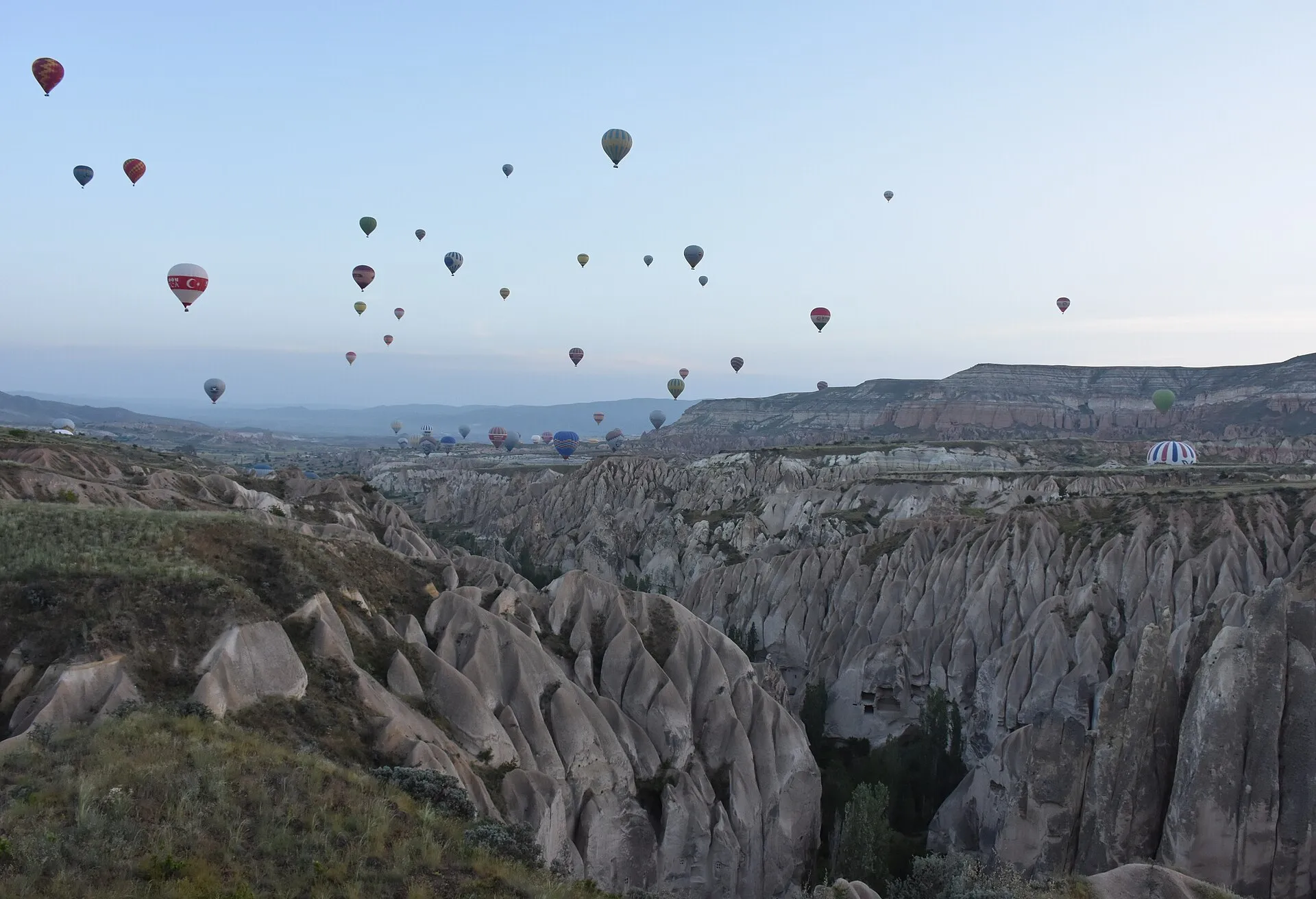
One practical note that applies to both regions: weather cancellations happen, and safety is the reason, so don’t push back on a pilot’s call. Book your flight for an early morning in your stay rather than your last, so a cancellation can be rescheduled instead of missed entirely.
Can you actually do both?
Yes, and plenty of people do. This is the part most “Pamukkale vs Cappadocia” pages skip, so here’s the real logistics.
The two sit about 600 km apart. A same-day hop between them is not realistic. Plan at least one night in between, whichever way you cross.
How many days the combined trip needs
A clean version most people use: three days in Cappadocia, then the overnight bus, then one full day in Pamukkale. That’s four days of sightseeing plus the bus night that doubles as a hotel night. Fold in Ephesus on the way, which sits between Pamukkale and the coast, and you’re looking at about five days end to end. Which region you do first comes down to where you enter Turkey: most people fly into Istanbul, take a short hop to Cappadocia, then work southwest toward Pamukkale, Ephesus and the coast, so Cappadocia tends to come first and Pamukkale second. Whichever direction you’re already travelling, do that one last.
The overnight bus (the usual choice)
This is how most independent travellers do it, and it’s a rite of passage on the Turkey backpacker trail. An overnight bus leaves Cappadocia in the evening (usually from Nevşehir, with hotel shuttles from Göreme) and reaches Denizli in nine to ten hours, for roughly €18 to €30. You sleep on the bus and arrive in the morning. The logic is the same as the Istanbul route: travelling overnight turns a dead travel day into a night you’d have paid for anyway, and Turkey’s long-distance buses are comfortable enough to sleep on. Book a day or two ahead in peak season. The full method, with operators and timings, is on the Cappadocia to Pamukkale route guide.
A multi-day tour with Ephesus
Because the sites are far apart and people want to see Ephesus too, multi-day tours that string Cappadocia, Pamukkale and Ephesus together are popular and well organised. They handle the long transfers (sometimes including an internal flight), the hotels, the entrances and a guide, over two to three days. Prices start around €150 and climb with comfort. It’s the right call if you’d rather not assemble a long overland trip yourself.
Flying, with a connection
There’s no direct flight. Flying means connecting through Istanbul or Izmir, which runs roughly €60 to €140 and eats about half a day. It can beat the bus on paper if the connections line up, but it’s rarely cheaper, and once you count airport transfers at both ends, the connection swallows most of the time saving. Worth pricing out, not worth assuming it’s faster.
Private transfer
A private car with a driver covers the distance in about eight to nine hours and starts near €300. It only makes sense for a group splitting the cost who want to stop along the way and travel in comfort. For most people the overnight bus does the same job for a fraction of the price.
The last leg, however you cross
You finish at Denizli, then take a minibus to Pamukkale village: about 30 to 40 minutes, running every 15 to 30 minutes, for around 50 lira. Tours deliver you straight to the gate.
Don’t rush it. Build in a night, ideally in Pamukkale village, so you can hit the terraces at opening (06:30 in summer) after the overnight journey, before the coaches arrive.
Which is easier with kids or limited mobility?
Worth a flag if that’s your group, because the two sites ask different things of your feet.
Pamukkale’s signature walk is barefoot up a wet, white, slippery slope, which is part of the magic and also a real hazard for unsteady walkers, very young kids or anyone in a wheelchair. The flatter upper area by the South Gate and parts of Hierapolis are more manageable, and you can drive in near the top rather than climbing the travertines. Cappadocia leans the other way: the underground cities mean narrow, low, steep stairs and tight tunnels that aren’t for the claustrophobic or anyone who can’t crouch and climb, while the valley hikes range from gentle to rough underfoot. Neither is a problem to plan around, but go in knowing which kind of effort each one asks for.
So which should you pick?
Here’s the opinionated version, by traveller type. This is where the “it depends” actually gets a decision attached to it.
Only one spare day on a wider Turkey trip: Pamukkale. It’s the one-day option; Cappadocia isn’t.
Three or more days and you love landscapes and hiking: Cappadocia, comfortably.
Want the single most dramatic photo moment in Turkey: Cappadocia, for the dawn sky full of balloons. But Pamukkale’s terraces are the more genuinely unusual sight, the thing you’ve seen nowhere else.
On a budget, or you want a big sight cheaply: Pamukkale. One €30 ticket against a multi-night region is no contest on cost.
Travelling in deep winter and set on a balloon: Pamukkale, where the terraces and the warm pool hold up whatever the weather does to flights.
Honeymoon or once-in-a-lifetime, time no object: both. Cappadocia for the stay, Pamukkale folded in en route via the overnight bus.
Based on the coast (Antalya, Izmir, Kuşadası): Pamukkale is an easy day trip from there; Cappadocia isn’t. Check the routes on the getting to Pamukkale hub.
These two aren’t rivals. They’re two of Turkey’s best and most different experiences, and treating them as a straight either/or is the one move worth avoiding. Pick by the time you have and the mood you’re in, and if you can, see both. To get a feel for the Pamukkale side before you commit, start with is Pamukkale worth it, then plan the day on our itineraries page.
Prices, times and distances last verified June 2026. Turkey adjusts museum fees and transport prices fairly often, so confirm the live figures before you travel. Cappadocia’s per-site and per-activity prices vary by operator and season and aren’t quoted to the euro here, so check them at the source.
Frequently asked questions
Can you visit both Pamukkale and Cappadocia?
Yes, and many people do. They're about 600 km apart, usually connected by an overnight bus (9 to 10 hours) or a connecting flight, and often combined with Ephesus on a multi-day tour. Allow at least one night between them; a same-day hop isn't realistic. See our Cappadocia-to-Pamukkale route guide for the options.
Is Pamukkale or Cappadocia better?
They aren't the same kind of trip, so 'better' depends on your time. Pamukkale is a one-day natural wonder plus Roman ruins, ideal if you've a single spare day on a wider Turkey itinerary. Cappadocia is a whole region you explore over two to three days. If your trip can stretch, do both: they're a classic pairing connected by an overnight bus.
How many days do you need for Pamukkale and Cappadocia together?
A clean version most people use is three days in Cappadocia, an overnight bus, then one full day in Pamukkale. Fold in Ephesus on the way and you're looking at about five days end to end. The bus night doubles as a hotel night, so it doesn't cost you a sightseeing day.
Which is cheaper, Pamukkale or Cappadocia?
Pamukkale is cheaper to see. One site ticket (currently €30, about $33) covers the travertine terraces, Hierapolis and the museum, with only Cleopatra's Pool as a paid extra. Cappadocia has no single ticket: you pay per museum, per site and per activity, plus a cave hotel for two or three nights, so the total climbs because it's a multi-night region rather than one gate.
Is the balloon better in Pamukkale or Cappadocia?
Cappadocia's is the bigger spectacle (dozens of balloons at sunrise over a stranger landscape) and it's pricier. Pamukkale's is more intimate and cheaper, roughly €100 to €180 per person, with the unique view of the white terraces and Hierapolis from above. If you're doing both regions you don't have to choose; even if you've already flown in Cappadocia, Pamukkale gives a genuinely different view.
Can you do Cappadocia and Pamukkale in one day?
No. At about 600 km and 9 to 10 hours apart by road, a same-day hop isn't realistic. Plan at least one night in between, whichever direction you cross. The usual method is an evening overnight bus from Cappadocia that reaches Denizli by morning, then a short minibus to Pamukkale village.
Where to eat nearby
-
Tıkır Grill House
The area's heavyweight: by far the most-reviewed restaurant around Pamukkale and still highly rated, which is rare since popularity usually drags scores down. A Turkish grill at heart, so come for kebabs and grilled meat. That rating-on-huge-volume pattern suggests it earns its popularity despite sitting near the site, rather than trading on location.
-
Hiera Restaurant
The village's special-occasion table, and reservation-only, so it's a planned dinner rather than a walk-in. A more refined sit-down meal with prices to match. Book ahead in peak season.
-
Osmanlı Restaurant
One of the most-reviewed places in the village, which points to a dependable, unpretentious all-rounder. Leans to Turkish meat dishes and kebabs, easy walk-in, mid-range. A sensible default for a good Turkish meal without deciding too hard.
Related reading
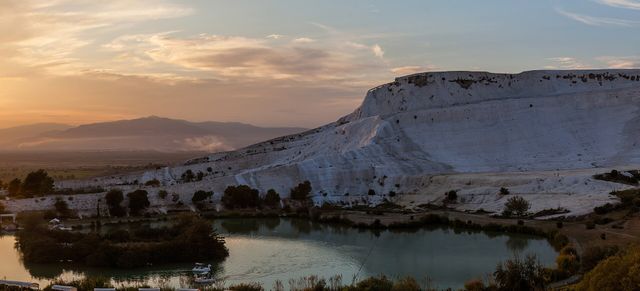
Blog
48 Hours in Pamukkale: A Two-Day Itinerary & Photo Diary
Most people rush Pamukkale in three hours. Give it two days and it hands you the terraces twice, at the only two times of day worth photographing them.
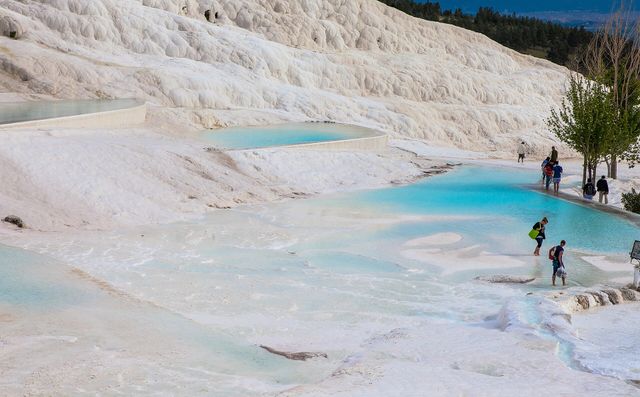
Blog
Pamukkale Barefoot Rules & What to Wear (2026)
Shoes off, swimsuit on, dry bag packed. The simple kit that turns the barefoot walk into the best part of the day.
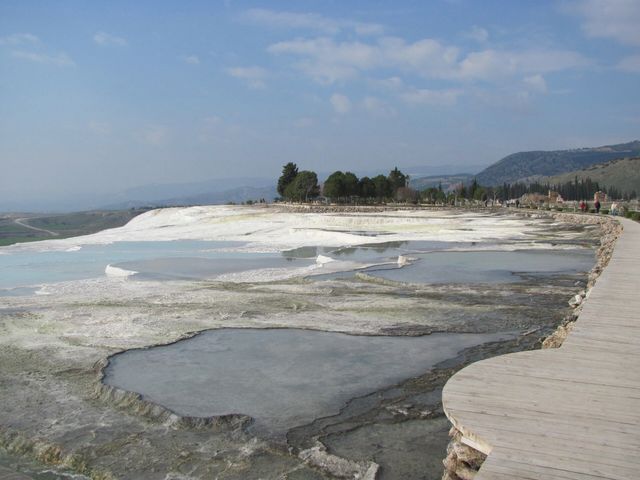
Blog
Pamukkale in Winter: Worth It? (What to Expect)
Cold air, warm water, empty terraces, and cold feet. Here's who winter works for and who should wait.